Viral Libels
Antisemitic Conspiracy Theories
as Information Warfare
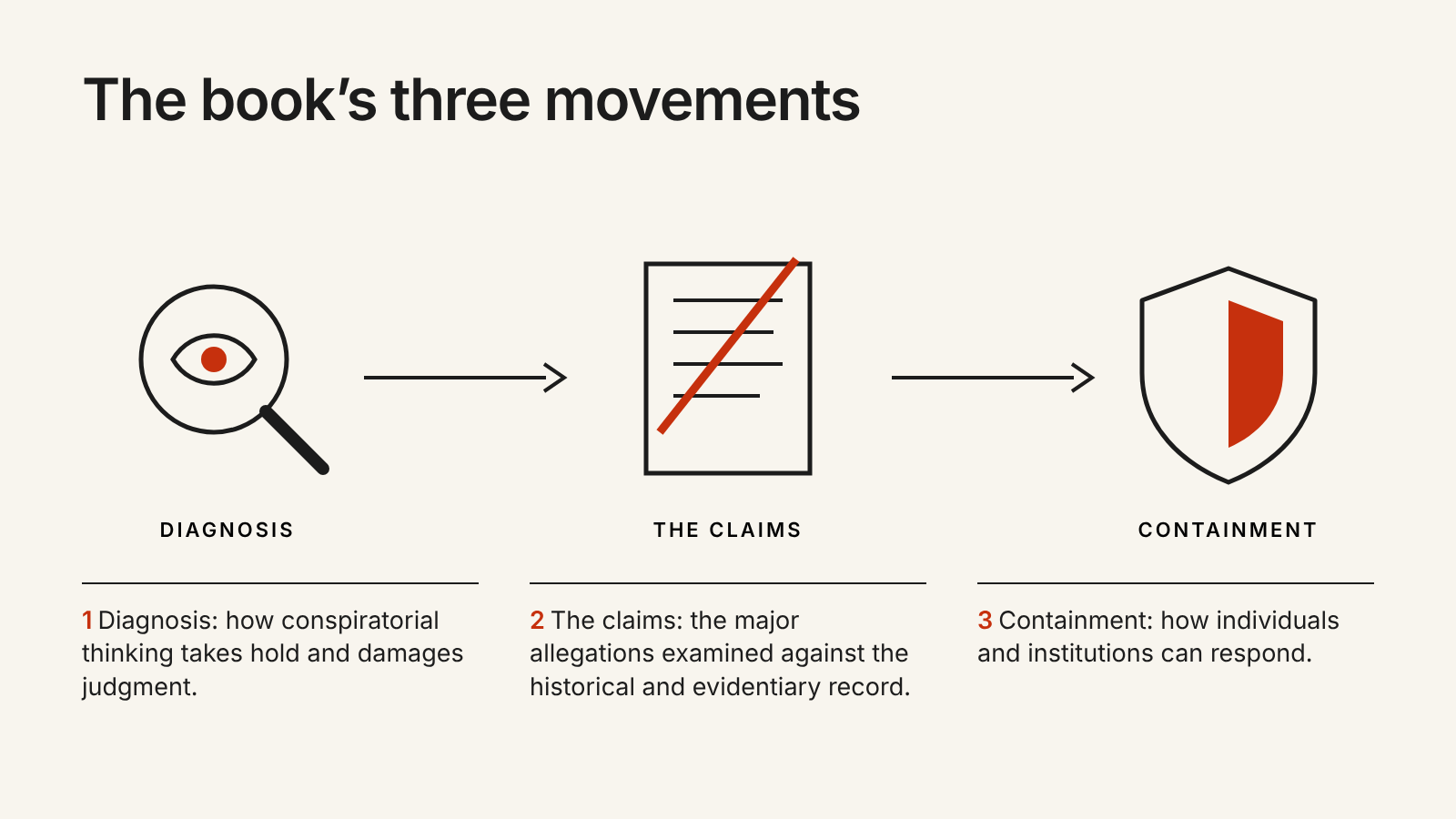
Written for the American Right by someone of the Right, Viral Libels diagnoses how conspiratorial thinking takes hold and damages judgment; examines the major claims about Jews and Israel against the historical and evidentiary record; and shows how individuals and institutions can respond.
The need
The antisemitic conspiracy claims circulating in conservative media have been condemned, cataloged, and labeled. The audience hearing them still needs something those responses rarely provide: a sustained demonstration of where the claims come from, why they are false, and what actually explains the events they distort. Organizations accustomed to addressing antisemitism through prejudice and discrimination have concentrated on the motives of speakers while leaving their assertions largely unanswered. Their association with institutions many conservatives already distrust compounds the failure. An accusation followed by condemnation can leave listeners with the impression that the argument is being suppressed because it cannot be refuted.
Answering these claims requires the depth and continuity of a book. They combine into an account of how the world works, connecting wars, financial power, cultural change, and political betrayal to a single hidden cause. Each has a history, a body of purported evidence, and ways of deflecting scrutiny that cannot be adequately addressed in a reply to the latest clip. Viral Libels presents the claims at full strength, as their advocates make them, and works through their historical and evidentiary foundations.
Written for the Right by someone of the Right, Viral Libels makes the case to its readers that they are being deceived. It takes seriously the institutional misconduct that earned their distrust and the political commitments that make these questions matter to them. Its purpose is to reach conservatives in a voice they will engage, with an argument substantial enough to challenge accounts they have heard from people they trust. The stakes include the future of Jews in America and the Right’s own capacity to understand and defend American interests. A movement persuaded that its institutions are controlled by a hidden Jewish power loses the judgment required to distinguish genuine wrongdoing from fabricated accusations, pursue effective remedies, and recognize the foreign actors exploiting its grievances.
What it does
Diagnosis examines how conspiratorial thinking takes hold, how it weakens individual judgment, and how institutional failures, media incentives, and foreign operations help it spread. Claims investigates the major families of antisemitic accusation: distorted accounts of Jewish theology; allegations of cultural subversion and control of finance, media, and government; claims about Israel and Zionism; espionage and false-flag narratives; and historical distortion. The final part, Containment and Recovery, considers how readers can preserve disciplined skepticism and how institutions can respond to the foreign organizations and operational infrastructure exploiting these beliefs.