Nobody’s job is to tell the plain story of Epstein
Wilfred Reilly talks with David Reaboi, Kevin Jackson and John Adams on the USA Live-Stream about The Epstein Conspiracy: how Ari Ben-Menashe manufactured the Mossad story; why no one in the U.S. government is assigned to fight information warfare; and why almost everything known about Epstein comes from people paid to keep the mystery going.
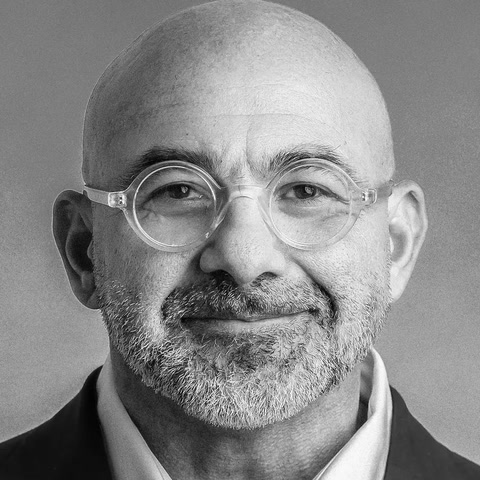
 David Reaboi with Wilfred Reilly
In this interview
- 0:00Introduction
- 1:43The most successful information operation in recent history
- 4:15Was Epstein blackmailing anyone?
- 7:15Propaganda from China, Russia and Iran
- 10:04Who is really posting this?
- 13:09Imposing costs on foreign operators
- 15:09Nobody has the portfolio
- 18:14Can it be stopped?
- 20:36Who was Jeffrey Epstein?
- 21:34Nobody’s job to tell the story
- 27:28A read on Epstein
- 32:10The tip lines
- 35:35The lizard brain
- 38:55COVID and the boy who cried wolf
- 41:45The Corporate Merit Index
- 48:04Final words
Transcript
Lightly edited for reading. Click any time to play from there.
Introduction
But let’s bring in Dave Reaboi, if I have the last name correct there, who’s also written a book. Before I do that, I want to go to the side of the page, give some very quick shout outs.
Liminal Sisyphus, sorry, I have a dry throat here, has been commenting throughout the discussion, matching kind of our attitudes. He says you get points on all sides, but it’s ridiculous how we Canadians hurt ourselves when we talk about tariffing. Internet and phone service providers, airlines. We live in American competition. Random things are run or influenced by the government. We sometimes forget this about Canada.
Canada is in many ways more a European country, in terms of both good and bad, than our partner to the north. They just tried to join the EU. They were going to have limited membership privileges in the EU. And the EU looked at their financial mess and us at the border as one of their funders, and they just said, no, we don’t need all that. You’re in NAFTA and so forth. But that was—
No, they’re like, we’ll take Alberta.
Yeah. Everyone takes a province. That’s the end game of Canada. And I also will note that anyone interested in the business acumen of the people on this panel, certainly of myself, Kevin, Brooks Crenshaw, who’s not here, should check out UnifiedSolutionsAmerica.com. Our entire focus, I’m not going to do the full pitch again, is going into your company, maximizing profit, making things work better with a focus on skill as opposed to— the line I usually use is— DEI, ESG, SEL, new HR, all that other garbage. So, UnifiedSolutionsAmerica.com. If you’re interested in that, I would recommend strongly that you check out John’s books as well. We’re going to plug those a couple of times near the end of the show.
The most successful information operation in recent history
Dave, you also have a book coming out. My man, what is your book about?
The book cover is right here. It’s called the Epstein Conspiracy.
That’s the kind of subtlety I show myself. Glad to see it. We’re all capitalists here. So, frame book cover in the back: The Epstein Conspiracy. I’m going to shut up, Dave. What were you saying?
Yeah, it’s easier than holding up a book, and it’ll stick. It’ll be there for the whole segment. So this book is an investigation into what I believe to be the most successful information warfare operation, I guess, in recent history. And it is the Russian attempt to blame Jeffrey Epstein on the Israelis and to say that he was working for Mossad in order to blackmail American officials and prominent people on behalf of Israel. So this was a lie that was manufactured by a guy named Ari Ben-Menashe, who is a kind of fascinating figure, probably the world’s most shady guy, who ran the same operation, interestingly enough, on Robert Maxwell 30 years ago.
So the Epstein-is-Mossad narrative basically rests completely on the word of this guy, Ari Ben-Menashe, who allegedly was a former Mossad guy. But he was never in Mossad. He was in Israeli intelligence. He was kicked out in the 80s. And since then, he has had a career accusing people at opportune moments of being in the Mossad. So he did this with Robert Maxwell. Robert Maxwell died two weeks later. He shows up and he does this 30 years later with Jeffrey Epstein. He’s got absolutely no evidence to support anything he’s saying, except, “Oh, yeah, we were there in a room.” Who else was there? “Well, a couple other people, but they’re all dead.”
Was Epstein blackmailing anyone?
But I have a question there, Dave. Yeah, because I don’t disagree with you by any stretch. You’ve done the research. But I’ll say this: it’s kind of like Diddy. If you go to a Diddy party and he drugs you and you wake up a little sore on the backside, you don’t know what happened. But you went to a Diddy party.
So I think with Epstein, people are looking at it going, he’s got a picture hanging of Bill Clinton in a blue dress in his home. And Clinton knows it’s there, and now the world knows it’s there. Something’s going on.
Let me put it this way. There have been many situations where, well, not just men, people have been honey potted. There was a whole British thing, a story about how the British Parliament were all honey potted by these madams. So it’s not a stretch to say that Epstein was potentially blackmailing people, even if it wasn’t from Mossad. Or am I off base there?
I think you’re off base, because there’s no evidence he was blackmailing anybody. You’re right about, in England, the politicians’ scandals. That was like 50 years ago. These days, we have a kind of different attitude towards scandals like this. The botchery? And yeah, honestly, number one is there’s just no evidence that anyone was blackmailed at all. If someone wants to bring forward some evidence, that we can talk about. But if you’re blackmailing people like Prince Andrew or like Bill Gates or like some of these folks, at a certain point, it gets a lot easier just to kill the blackmailer.
Well, blackmail is probably the wrong word. I think it’s more like, I have information on you. It’s all over the place, because they all have these dead man switches: if anything happens to me, guess what, the video gets out. And I have no evidence either. I’m just saying there’s an old saying that this guy on the radio, black dude on the radio where I grew up, would say, “You say, y’all, if a buzzard is circling, something might be dead. But if a hundred buzzards are circling, something is dead.” And there’s a lot of buzzards circling.
Well, I didn’t do the book about Epstein because, honestly, that’s a black box. My book is focused on a very particular lie about Epstein.
Propaganda from China, Russia and Iran
So my allegation is that the Russians grabbed onto probably the biggest story in the last 25 years, the most viral story, and they injected it with bullshit in order to advance their own political interests.
Can I jump in here and get John? John, I have a question for you. You lived in China; you’ve had a lot more experience than I had there.
What I’m noticing is so much misinformation that’s coming from, in other words, I used to just believe stuff that I was told by Cronkite and Dan Rather and these guys. Now I don’t believe anything. I just believe it’s all propaganda. As far as I’m concerned, it’s propped and given us our news for all intents and purposes. And we’ve seen the Russian collusion lie. And that’s not the— I don’t want it to be any particular party. We’ve seen misinformation both sides. I think most of it comes from the left.
And even this story right now that Dave’s talking about, how much of that? What are your thoughts on that, having lived in China and understanding that culture? How much influence do you think they’re having? They’ve got academics that we’re seeing, Chinese. I don’t even call them spies anymore. They can operate almost openly, because in capitalism, like I said, I was sent over to stop IP theft. It was still going to happen.
We knew it. It’s still happening now. It’s happening in academia. They’re in the government. We just arrested Chinese spies in California. A woman who was a mayor of a city was an operating Chinese spy. We’ve got them all over the place. What are your thoughts on misinformation from that regard?
Well, it’s a massive issue. And just to clarify, I didn’t live in China, but I went there very frequently the last 20 years. Yeah. Well, in China, the main issue is the propaganda that’s internal. If you look at the press that the people are getting there, it’s not accurate.
And are they very likely trying to impact our elections? Is Iran trying to impact this midterm election? Yes. I agree with Dave. Russia clearly does this, and it’s quite likely they did it in the Epstein case.
But propaganda is— we’re in the information age. Propaganda is the name of the game. If you look at what happened in Israel the last three years, it’s that Israel won the battle and lost the war. It was a propaganda war from the start. Hamas didn’t— they never thought their little invasion of Israel was going to do anything other than what it did, which was launch an all-out propaganda war, which they’ve won.
Right. Yeah.
Who is really posting this?
And that’s actually a good break point. I also want to come back to you, John, as well as to Dave, so we all kind of stay involved on the panel. But one of the issues here is very broad, which is the extent to which a lot of the information people see and trust is complete bullshit.
So I’m pretty active on X and other social media. And about six months ago, when national origins became available, and there are also ways, which we probably all know, to track IPs and so on, I started looking at people who posted certain kinds of content. And at first it began almost as a joke, with radical feminists that my fiance would look at. And I would say, I bet this is a Pakistani man, something like that.
As soon as you could tell, I actually linked onto those profiles, and a very large percentage of them were in fact Pakistani men or women or Nigerian or whatever. They were taking this commodified, simple, direct, like, “boys can be mad,” and they were pumping it out to Western young women, who were considered an easy, kind of dumb middle class dynamic to influence. With no comment on the accuracy of that. But that surprised me.
And then I started looking at a lot of the people that were promoting, Kevin, we’ve talked about this, but sort of the anti-Indian stuff, anti-Jewish stuff, whatever you might think of our relationship with Israel or India. And it was the same thing: location, Belarus. So there’s a question of how much of the information that we see and consume is just BS.
And I would encourage everyone to do this. When you see someone say, “Indians are such dirty sex pests,” check their nation first, get an IP if you can. And then also just look for the little eye symbol on X or whatever that indicates they’re using a VPN. And the number of people that are non-Americans, that have no opinion really on our politics, that are doing some kind of info war campaign or that are just in bot shops, that’s incredibly high. I think that’s issue one. I think we’re all aware of that.
I think a lot of people on the left are totally unaware. And I think a lot of people on the right are kind of partially aware at best, where they’re looking at the Indian stuff. They’re seeing these white Asian guys go back and forth, and they’re saying, well, I guess I’m a white guy, I should be on this side. And you don’t realize that both people engaging are coming from a foreign country, probably from the same van somewhere. But the second point is just—
I wonder, Dave, is this something that you tracked when you were putting this together, in terms of you knowing that the Russian, this particular guy you’re talking about, this despicable guy? Is he the origin, or is he like the George Soros of misinformation about Epstein?
Oh, no. So the first question is, yes, this is the kind of stuff that I track. But also, I didn’t rely too much on bots and bot networks and things like that, because honestly, it is a black box to the— I think it’s outrageous that our social media companies are not forced to take precautions here.
Imposing costs on foreign operators
It’s just, I don’t know. The last chapter of my book, I talk about imposing costs on some of these hostile foreign actors. And I think when you are deliberately pumping American social media full of sludge meant to break people’s brains and make them hate our country and make us hate one another, I think that’s a tremendously hostile act that an enemy country needs to pay for. And they need to pay for it with, frankly, their lives.
There are people who wake up in the morning and their job every day is to fuck with America, with the American people, via social media and podcasts and whatever, and run information operations intended to make us crazy. Why are these people allowed to— why do they feel like they don’t need to look over their shoulders? Why are there so many boiler rooms all around the world, from Karachi to Belarus to Moscow to here and there, that are the infrastructure of information operations?
And we just allow it.
So haven’t we done a little bit of this? I was a very junior man on a call recently with Kash Patel, and this is why I’m asking this question. One of the things he said is, we understand now that there are these scam farms and bot farms. The ones he mentioned were in Cambodia. So we’ve actually worked with people like the Royal Thai Air Force to bomb them. These are small communities that are doing this. So I guess, Dave, you’re basically going to proceed with what you’re saying. But don’t you think that our government is trying to respond? It’s just, this is a whole complex mix globally, where we’re doing this to the Russians and so on.
No, I don’t think so.
Nobody has the portfolio
I took a look at it, and we have like 16 different agencies and departments in the national security space that are looking at things around this, not at this. Nobody is looking at information warfare. Nobody. Nobody has that portfolio. In fact, there was one department at State that did have that portfolio. And as soon as the Trump administration came in, they got rid of it. What? Oh, yeah, absolutely.
Now you can make the argument that the people working at this department were bad people and needed to be fired. And you know what? I would be sympathetic to that argument. But I’m not sympathetic to getting rid of the department and leaving it completely unstaffed.
So one of the things that we’re really good at, for example, is we go after hackers who steal people’s emails and things like that. We go after people who are sabotaging our infrastructure, like trying to get into dams and power stations and things like that.
All that is great. But when it comes to information warfare, there’s nobody on the case. And I think it’s ridiculous. After 2016, there was a lot of attention kind of put on this, because that’s when the left jumped in and they said, hey, we’ve got Russiagate, and we’ve got the dangers of disinformation and all this stuff. And basically everyone who used to work in what was called combating violent extremism modified their resume, and they went over to the disinformation and misinformation academic space. And their main idea was, OK, we’re going to go and we’re going to crack down on speech by Americans. So that’s why you had the Twitter files, you had all these attempts during the Biden administration, especially, to go after the speech of Americans. I don’t think that’s necessary. I don’t think that’s necessary at all.
There are plenty of bad guys to go after who are outside of the country, who don’t have First Amendment protections and who intend to do us harm. I think we should start there. And once we deactivate those networks, then it’ll just be a lot easier. We’ll be able to be a lot easier.
Can it be stopped?
Dave, this sounds suspiciously like John’s world of no tariffs. It just ain’t going to happen. We’re going to have misinformation, especially in a time of A.I. Man, you talk about misinformation, it’s going to accelerate. And I hope that John’s point, that the tariff situation works itself out. But I don’t anticipate that. I think that we keep incrementally doing these things. And suddenly, to illustrate a point John made earlier, nickels and dimes end up being dollars. So here we got missing—
One of the things with X in particular, because a lot of this happens on specific sites like X, Twitter, the TikTok, I believe the Chinese owned one. There’s a question of whether we should cut ties with them totally. I actually supported Trump’s initial statement: we’re not going to let Chinese product like this into the country.
But on X, for example, if you talk to anyone that’s director level there, the IP and all the core content behind the accounts that are releasing this information, it wouldn’t be hard to put a banner on the bottom of the screen that says Russian or something like that. That’s a bit— No, I would definitely do that, though. That would be one response to this kind of misinformation, or just delete those accounts.
Nikita Bier over at X got into a big brouhaha recently when he said the most common bio for a bot is like Christian dad, white man, this kind of thing, love America. And even I initially reacted to that, like, come on, is this more just shitting on heartland American? But when you think about it, how else would you pitch Americans if you’re Russian, Pakistani, Indian, whatever, Chinese? You’re not going to say, I’m a Chinese spy. Now, even if you openly do, I think it’s less common.
I follow, I think, Z. Boucher on X. And this person is openly a Chinese academic who’s probably an agent. And they’ll just say things like, oh, it looks like that new flight of the British Tornadoes didn’t work very well. And they’ll be critical of the West. And I’ll sometimes repost it with things like, “Chinese spy be like.” But the more subtle stuff is the people you don’t know are Chinese agents, you don’t know are Russian agents. But one question, Dave, that I don’t think anyone’s gotten around to asking yet.
Who was Jeffrey Epstein?
I’ve been interested in Jothby with this, too. Who was Jeff Epstein? I think in the one sense, he’s become this whole idea of the Epstein class: we’re run by blood-drinking, child-abusing perverts. Our enemies are writing this stuff down. They’ll release the full Epstein files. It was great if you’re a Russian or Arab agent, by the way. The stuff in there on the tip line is totally crazy.
But Jeff Epstein strikes me personally as kind of a rich perv who dated, not dated, but abused young women just under the age of consent. They’d come over to his penthouse. There were honestly, in the 70s and 80s, probably quite a few rich guys like this. Our current idea of the length of childhood is very recent, even thinking back to when I was a kid.
But that’s it. He was friendly with a lot of people. He went to the gallery openings. He liked to fuck older teens. And he knew a bunch of people that maybe shared that interest, maybe didn’t, that went to his parties. Is that correct? Or is there something a lot deeper and more wicked there?
Nobody’s job to tell the story
Well, I have one question for Dave, which, the part of this that, again, coming from the Wall Street perspective, is I never understood where he got his money. And I agree. Why people were listening. Why was Leon Black working with this? Leon Black is brilliant. And you can have your opinions about Leon Black, but he’s a brilliant guy and built an incredible business at Apollo. Why was he dealing with this guy and paying him so much money? I just don’t understand how a guy like Epstein could be in the circles that he was operating in. And where did he get his initial money? That’s the part I’ve never heard.
Well, there’s a reason why you haven’t heard it. And that is because it’s been— no, it’s been literally nobody’s job to tell the story of Epstein who is not somehow making money off it.
And this is a media story from the very beginning. If you go back, you will find that there are reporters who covered Epstein from the very beginning and who are still covering the story. And they’ve had their stuff optioned for TV series. They have been paid by attorneys for people who have sued Epstein. They’ve made a tremendous amount of money stoking the mystery of Epstein.
It’s in nobody’s interest to say, hey, here’s a forensic accounting with everything that we know about how this guy actually made his money. It’s a hard thing to do if the guy is not around to help you, if he’s not alive, and if you don’t have access to all the information.
I would love to know exactly how he made his money. I think there are people who have read every single drop of the Epstein files who have a pretty good idea, certainly better than I do. But I think it’s important to recognize that basically almost everything we know about this guy and about this scandal has come out from, let’s say, very interested parties.
Michael Tracey, who’s a guy who I disagree with on almost everything, but nevertheless, I think that he’s very brave, and he’s got a lot of chutzpah. And he kind of is alone, or relatively alone, standing up against a lot of this hysteria, saying, hey, this is really similar to the satanic panic in the 80s.
And when it comes to Epstein, I think there is a huge disconnect between what people are sure they know about him and what stuff they can prove about him. So, for example, the conspiracy theories, from drinking blood of kids and human sacrifices and just anything that you can come up with.
For example, people are asking about the client list. And it’s like, well, there’s no client list. The client list is like four conversations of telephone away from his phone book. So it’s like his phone book becomes a client list, becomes this, becomes that, all through the game of social media.
And I’d hate to be his dry cleaner. Right.
But as I said, this is what happens when literally nobody has it in their interest to tell the full story as they know it. Everybody is on the make.
I think that’s the key. Almost every journalist who’s involved. That’s the key. Everybody’s on the make. Because here’s the deal. Epstein was a pervert. I don’t think there’s any disagreement with that. But I honestly believe this story, when you look at the facts of this story, I’ll give you an example. How does a guy like him become convicted of, I guess, was it child rape or something like that?
Child sex. Child sex.
Yeah. And still maintain friendships and maintain business relationships and hobnob among the best in the circles. I don’t— I’m not all into Pizzagate and stuff like that, but at the end of the day, you got to ask yourself the basic questions. Because if one of my people that I was hanging around, if we found out that was what he was about, there are certain things you get cut off in my world. And that’s one.
But here’s Epstein. He’s still hobnobbing. He’s moving and shaking. He doesn’t spend time in jail. He’s walking. I think he even had a ankle bracelet, but he can still get out. Brothers can’t get out of the hood. If you got your ankle bracelet, you can’t get out of your yard. Epstein had freedom to move. He was flying around in planes.
There’s certain things that defy common sense, that say they’re powerful people manipulating, or he’s manipulating them, so he could get away with stuff. Because I watched the documentary on him. And I know that there are things that the ordinary person doesn’t get away with.
A read on Epstein
So here’s my read on Epstein. And again, I’m not the world’s great Epstein expert. What I am an expert on is a particular information warfare campaign waged in order to take that story and sort of weaponize it. But in regards to Epstein himself, I think that he was obviously a very smart and gregarious person. The emails kind of attest to that. If you needed to figure out how to deal with, I don’t know, your taxes or your estate or whatever, he would be a guy who could figure that stuff out for you. Also, he threw interesting parties with interesting people. And I think if you are a famous person or a very wealthy person or someone like a Bill Gates or a Woody Allen or something like that—
And there’s so many more, very controversial guys.
Yeah. But right.
Right. But obviously there were many others who maybe weren’t his best friends or whatever. But you’re a famous person; you don’t just hang out with anybody. You hang out with people who don’t remind you that you are famous.
And I think you got it backwards. You’re able to do that. Yeah. I think you got it backwards. To John’s point, Epstein is a nobody. He came out of nowhere. I know a little bit of his history, and you say, what makes him a celebrity? How’s he getting to hobnob with these guys that are real Titans? And because the other side—
Because he’s got money, and people who are famous hang out with people who are unknown but have a lot of money. He’s pulling a Schindler’s list. That’s the thing that happens all the time.
He’s pulling a Schindler’s List on people is what it amounts to. Because he wasn’t the guy, but he pretended to be the guy. And eventually people see enough it people with you, and suddenly you’re the guy. Because there’s no reason for us to be discussing Epstein. In the scheme of things, he’s not.
This is the thing with Epstein where we probably all agree. Epstein was a good hustler. He was a New York guy. He took advantage of that kind of Sodom-like period in New York and Chicago when you could do most things. Saturday Night Live actually ran ads for the city that said, “Welcome to Sodom,” that showed Studio 54, people getting mugged in parks.
I’ll be real about this. There used to be rock and rap songs with names like “17.” The idea that Epstein was doing something critically wrong by bringing escorts to family parties or by pursuing girls who were a year or two under the age of consent…
Most of the quote-unquote Epstein survivors (this is a point Michael Tracey made) seemed to be adult escorts. Basically, they were 19 or 20 when they knew Epstein. I do think today, and this is an improvement, that Kevin, man, including me, you, John would kind of move that guy toward the door: “You can’t do this.” But I don’t think that there was a big backlash to this for a long period of time.
So you have this guy who was a city hustler. He was a Jewish American dude. He was a teacher in one of the city’s magnet schools. He really did make some money on a couple of big deals. He just had a Rolodex. That’s the baseline, obviously, at least. The question is, was someone blackmailed in America? That’s another level up. Were Bill Clinton and all these other people participating in some of this stuff?
That’s a level up. I don’t know. I’d be curious whether any of you gentlemen do. But the basic idea of this guy who’s a hustler in a big city during this era was screwing a lot of people who weren’t quite voters yet and was going to the galleries and so on. I actually don’t find that all that surprising. At the tail end.
He’s a Jewish superfly.
That’s the thing, though. There were black versions of that, Irish versions of that, Jewish, Italian, all those city guys. This is back when men used to dance. So it’s, I’m not… that we know. The question is, is there anything beyond that? I can’t give a personal or professional opinion on that.
The tip lines
But I will say one thing, and I’m interested to get Dave’s opinion on this. When I went to law school, Illinois law, when I graduated (this was around Chicago), pretty often one of the things they said was: never listen to the stuff that’s on the tip lines in a case. And the Epstein files seem to mostly be these kind of tip-line records, where a number was set up, a contact point was set up, and people were allowed to comment in with things that they heard about the case. So you got kind of a comment section, but real. So anyone that had gone out with one of the now-adults (and they were all still bookers, like Epstein escorts or prostitutes, the Epstein girls), so tell them any wild story that this woman had told them.
And the Russians were telling them.
Well, that’s like what the spy stuff is. I think Dave’s book is good. It’s The Epstein Conspiracy. Check it out on Amazon. Obviously, look up the Third Phase novels as well from John Adams. So we’ve had, as we are ourselves, Kevin, some good, genuine authors on the pod tonight. And some of that’s discussed. The spy stuff I don’t know about, but I do think there’s some backstory there that we can kind of work through.
When we talk about the stuff on the Epstein tip lines, I’ll give one example, but I think it’s important to think about some of it. One of the stories was that (and Dave, correct me if I’m wrong here) it was Donald Trump, Hillary Clinton, maybe Bill Clinton, Clarence Thomas, and I think the phrasing was two Olympic athletes, were on a boat together, and they killed and ate a small child. So they butchered the— deer hunting— they butchered the growlip, the kid. So they cut the throat, chopped the intestines open. They took the traditional hunter’s rite of a bite of gut and a bite of heart.
And it strikes me that someone with intensely rural memories is describing something his girl told him and throwing this stuff in. I don’t think that Clarence Thomas and Hillary Clinton are eating kids together. So that’s the element of this that everyone paid attention to. And it’s kind of maybe a huge mountain over the molehill.
This guy was a big city hustler. Yeah, he had some sketchy, high powered friends and creepy stuff happened with the daughters of Midtown lawyers, which is kind of my guess. But again, I don’t know.
It reminds me of the movie. I was just looking up the title. It was like The Cat’s Meow. Have you seen this film? It’s the Peter Bogdanovich film. It’s very good. But it’s kind of about this classic Hollywood story about a bunch of famous people on a boat, and a guy dies. It’s a rumor that there was a kind of rich and famous killer. And it’s all about sort of the cover-up of this thing. It’s Hollywood lore that goes all the way back. And is it true? I have no idea. But nobody knows. We want to believe these things. We just do. We want to believe these things.
The lizard brain
In regards to Epstein, I think the Russians saw something. They identified something that is really powerful, which is why I think they use this particular narrative. And that is that you try right now to talk to someone who has been completely convinced of the most crazy Epstein conspiracy stuff, and you just say, “Hey, are you sure about this? Do you know this? Or maybe you have an alternate explanation,” and they will go crazy. There is absolutely something in the lizard brain of a certain type of person who becomes obsessed with QAnon, who becomes obsessed with Epstein. And really, it’s the same thing. It’s this idea of, “I’m a good person. I want to protect children. And the worst people in the world are something else, though.”
Yeah, I think everyone on the panel is wanting to jump in. But quickly, isn’t this just the werewolf legend? “There’s a horrible elite that exists beyond society. I feel oppressed. They must be doing something.” Right now, we’re in a time of real class and racial tensions, the millenarian stuff that produces this. And I think there’s a tendency on everybody’s part to try to get gnostic: look at the people behind the veil that are really manipulating society. So on the right, we tend to say the feminists, it’s them; “it’s the elites” is common on the right. Some people on the hard right would say the Jews, and we’ve all heard that, frankly. On the left, they say the white man, the Jews again. The Jews are having a hard time right now.
I was going to say the far left is going to pick on the Jews.
Well, yeah, but it’s the far left hates the Jews because the Jews are the Jews. But the far left dislikes Jewish people because Jewish people are successful, and that automatically puts them in that white good category that John Adams was breaking down before. The idea is that success shows you’ve probably committed some kind of great sin. But anyway, I think right now we are in that werewolf-vampire kind of modality. And notice those novels are becoming popular again, where people understand that someone is fucking them and they don’t understand who. To get to the point, they know there’s someone up there. And if you ask a smart working-class girl (I did this)…
They were at a Diddy party, right? Your Diddy party thing, right? No.
Well, that’s actually a really good joke. Nobody knows who’s skirting.
But pop it back to the TG zone, though. If you ask a smart working-class girl who runs society (this came up the other day at a Whole Foods), you’re going to hear an answer like a clique, or a C-L-I-C-K. There’s a button being pushed somewhere and I don’t know who’s pushing it. And when you hear stuff like that…
And to the rest of the world, very often, the USA fills that ruling-class role, maybe alongside China. So if you’re in Algiers and you hear that the leaders of America are eating kids, you’re going to be very likely to believe that, because it’s a time of growing wealth disparities. As Kevin likes to say, some people are landing rockets backward. A lot of other people can’t tie their shoes. A lot of other people don’t have shoes. So there’s a time of suspicion right now. And I think Dave’s done a good job of outlining it in this book, The Epstein Conspiracy. But what do you think about that?
COVID and the boy who cried wolf
He is, but I want to pivot a little bit to John, because I look at COVID and the lies and the propaganda that came from that, because that to me is bigger than Epstein. No offense to Dave’s book. But it’s again this whole misinformation, this industrial complex of misinformation, and our government was complicit. You look at the Russians. My curiosity for Dave would be, how much do you think we participated in this whole idea? I believe there’s Russian involvement. But then the left will jump on it because, hey, if we can tie Trump to it through some call center, “Trump eats little babies at Epstein parties.” And the next thing you know, the left jumps on it and joins with the Russians. That’s kind of what happened with COVID. John, I don’t know if you have any theories on that with the Chinese.
Well, yeah, China, their performance during COVID was so disappointing because they were obviously lying. You looked at the death numbers. And I know people at hedge funds that were getting satellite views of the crematoriums in the Wuhan area, and those things were smoke coming out all night. So they were cremating people like crazy. And so these guys started shorting the market before any of this was public, because they knew there were thousands and thousands of people dying in Wuhan, and China was just lying about it. And that’s a problem. What I worry about with COVID is the boy-who-cried-wolf thing: this just ridiculous overreaction, which was more on the left, obviously. But I’m worried that now, when inevitably a really dangerous bug comes, we’re not going to take the precautions we have, because of the boy-who-cried-wolf problem.
Yeah. Yeah. Right.
And I think our enemies loved that. They loved how ridiculous our government was during COVID, because it gave them an opening. It gave them an opening to come and say, “Hey, let’s take advantage of the fact that Americans don’t trust their government,” with good reason. And that allows them to inject all kinds of craziness into the bloodstream.
Yeah.
The Corporate Merit Index
Hey, guys, I apologize. I’ve got to run.
But, John, I do have a thing I’d like to ask you. It sounds like you still may be involved in a lot of business contacts. We would love to get our Corporate Merit Index… We tested it, and I can’t say with who. It’s a Fortune 500 company. And we’ve done some stuff. I’ve had a meeting with the president of the company. We’d love to get this in front of some folks.
I’d like to make this a category that sits right next to your annual report. It’s a measure of your merit, the same way HRC was measuring. Standard & Poor’s has an ESG chart that, quite frankly, is both… I don’t think it’s very relevant. And there’s others. But this thing is so well done that I’d like to get it in front of a couple of execs that will let us get this thing tested, so we can start a new category. I think we should be measuring merit.
And I’d like to get some of that. It’s a great idea. If you guys are setting yourselves up as kind of the anti-DEI consultants, and if you can make 10% of what the DEI consultants make, you’re going to do really well.
Well, it’s not just a money play, even though…
I know.
We’re capitalists. I’m an avowed capitalist. But at the same time, we’ve got to push back.
It’s a great idea. Yeah, back to merit, because how do you measure it? And that’s a really great concept. I’d love to hear more about it. Well, I’ll have Will… It looks like you dropped off.
Please get us in contact with that and the book. And Dave, same thing I’ve offered to John. If you want to give me your information, I’ll tell you what we can do to promote your book. We have 16 million Christian conservatives in our network, and I don’t know how many of them are interested in Epstein. But in the Russian connection, a lot of them are. And I think the Russian connection would be a good thing for you. So hit us up and we’ll do what we can to help you.
I’d love that. Thank you.
So, Will, if you can get them my information… I got to run. My wife just made it home. And y’all see, I got my flak jacket on.
We all agree it’s the most dangerous time of the day. Well, Godspeed to Kevin Jackson. Thanks for coming on. Maybe next week, Will. Hopefully we’ll see each other then. It looks like this is doing a little better.
And John, if you don’t mind, I will follow up after this conversation with my contacts at Kevin’s. I’d be interested in setting up a call. I’m probably myself open to promote the book. I have a large social media network. Let’s just be favor-for-favor kind of stuff. Kevin does have a contact list of about 16 to 18 million, so that might be something a little more serious. And I’d also be interested in your take on the… Well, mine’s 800,000 or something. But again, the question is who responds, et cetera.
The Corporate Merit Index, that actually is a great opener for a final plug for everything, and then some words of wisdom, isn’t it, gents? So the Corporate Merit Index is something recently released by Unified Solutions America, which is the consultancy founded by myself, Brooks Crenshaw, formerly of the Navy SEAL Intel Teams, and Kevin Jackson, ex-VP level roughly at Fox News, founder of The Black Sphere. A number of other people obviously work with the brand. I’ve mentioned Jason Riley. I’ve mentioned Ian Rowe, Charles Love, Mel Chen, Jane Lingle, James Lindsay, local distance.
That’s actually the Canadian theorist, Michael Yar, and so on down the line. And the comment you made, John, these are sort of the anti-DEI consults. I think that we try to go a little beyond that, but that’s roughly how much doesn’t focus on SEL, improve your team as a trading flow, as a firm that sells shoes and outdoor apparel. The answer is probably not very much.
If you’re interested in what we can do, including the Corporate Merit Index, which is designed by Brooks Crenshaw and a couple of our quants, and actually attempts to score businesses (and I think succeeds, as a pretty good quant myself) based on commitment to merit-based promotion, so on, as opposed to any of the things we’ve talked about, all that’s available at UnifiedSolutionsAmerica.com. It seems like the USA leadership team will be talking about this and a lot of other things with John Adams, the excellently named John Adams, author of the Third Phase novels and Platonist thinker. And obviously today we’ve also talked with Dave Reaboi, author of The Epstein Conspiracy.
Normally we end these shows with kind of final comment from each person. And I do want to specifically note that I’ve read both of these. I found them both excellent. We’re not kidding with the people we bring on. Both of them are great, but The Epstein Conspiracy, I think, was needed.
If you look at the comments on the side panel, a lot of people have been using these sort of rote terms like the Epstein class. Even friends of ours like Sisyphus, the Canadian who was mocking this, were saying, “Well, I’ve heard this. Thank God there’s a response to this conspiracy porn.”
And I think that there’s a place for the iconoclast. Either one or both of you mentioned Michael Tracey. Shout to Michael Tracey, journalist. I don’t agree with Michael on much either. It seems that as soon as he finds a conventional point of view, he wants to disagree with it. He’s also arguing about the Cornell 7 and so on. But there is a point where you want to look at things that are being universally accepted that are probably wrong and critique them. And Dave has done that. Mike does that as well.
John, one comment for you before we give our words of wisdom. You mentioned being in China and being disappointed by China’s behavior. I actually pulled up the Worldometers statistical research, which I use in my own professional research, and I scrolled down the list of deaths for each country, COVID-19-related deaths. And China has been stable at around 89,000 since the first year of COVID, meaning that at some point they simply started lying and denied that anyone else had died. And so they’re actually screwing up the entire global ranking of countries that suffered the number of deaths, and so on down the line.
And as an autocratic state, China can do that, unfortunately. But all right, guys.
Final words
We’re about to wrap. But Dave, what’s a final word of wisdom? How would you pitch your book? And also, what do you think about the general conversation today? What’s the most important thing people should take from what you and the other panelists said?
I’m afraid that I missed the whole talk. So I can only give you a readout of what I witnessed. But it was great. It was very engaging. I’m not a tariff guy. I’m not a finance guy. So a little bit of this went over my head, and I’m sure that every listener is better off that I didn’t open my mouth during that time, which is fine. I just kind of focus on my little patch of grass, which is information warfare. I wrote this book because, obviously, I wanted to get a chance to kind of defang what I think is a consequential and, frankly, sadly successful information operation that targets the United States, targets Jews, targets the state of Israel.
And I wanted to push back on it.
But the other thing, too, is that I want to make people aware of how this stuff works. And sort of any time you see something going on, it’s worth trying to look at the stitches on the fastball. It’s worth trying to decipher: how do we know this thing that we think we know? And I think that is one of the most useful exercises for consumers of news. And we’re all consumers of news. Even if we’re on social media, we have this little box that shouts in our ear nonstop all day long and tells us things.
How do we know these things are true? We can look at it in a couple different ways. Some people say, “Well, I’m going to believe everything that I see.” Some people say, “I’m going to believe nothing that I see.” I think both of those are ridiculous, and both of those are self-defeating.
At the end of the day, we need to learn ourselves how to adjudicate stories that are true. And we need to ask ourselves, okay, is this reasonable? Does one plus two equal three? For example, the day that I released the book, allegedly serious people popped up and said, “No, actually, you’re wrong. Epstein was Mossad, because we’ve got him in a photo wearing a T-shirt that says IDF.” So, case closed.
What time of day did they pop up?
Oh, well, that, yeah. I woke up in the morning and before 8 a.m., there were already hundreds of comments. But it’s much later in Moscow.
But, no, people who are real, people who I know are real human beings, brain-damaged, but real, were saying things like, “Yeah, he’s wearing an IDF T-shirt. It’s open and shut.” Or, “Hey, he was friends with Ehud Barak, the prime minister.” And I’m scratching my head and I’m thinking, so you think it’s a normal thing for a CIA agent in the field, for his handler to be, I don’t know, Jimmy Carter or George H.W. Bush or something? Is that a normal thing that you think goes on?
But people kind of don’t know anymore how to evaluate evidence, how to evaluate: is something true, is something likely? So my book is a small attempt to try to convince people to bring with them a more rigorous standard to the news that they see on social media and elsewhere.
Yeah, then that’s a great conclusion for Dave Reaboi, author of The Epstein Conspiracy.
If I can offer one comment on that before we go to John Adams of Third Phase: I think that basic idea, you just described kind of the scientific method. You want to examine things, including those things everyone knows, that burying a black cat in a graveyard at dawn cures warts, or whatever the modern equivalent might be. And that’s something I try to do in almost every case. And I will say in my own research, looking, for example, at all of critical race theory, both as a Unified Solutions America executive and as an academic professor, I’ve often been surprised by how utterly weak the things everyone knows are.
So the argument for CRT (and I’m not exaggerating with this, and you gentlemen are familiar with it), it’s essentially: there are gaps between different groups. On a typical test of intelligence, Jewish Americans outscore Asian Americans, who outscore white Americans, who outscore about a tie between black and Hispanic Americans, who outscore Native Americans. That must be due to prejudice. That’s the claim, especially when we’re just comparing whites and blacks. The problem is that it makes absolutely no sense. There’s no argument that Jews or Japanese Americans have suffered less oppression than Caucasian Hispanics.
The theory facially falls apart. People just refuse to recognize that. And from my scan (I didn’t read every single page) of the book, I would say that’s true for a lot of the Epstein claims. The stuff on the tip line, as a lawyer who knows what a tip line is, really stuck out to me. Do you believe Clarence Thomas and Hillary Clinton are working together to commit child murders? That’s the most extreme example. That’s kind of how I talk and present. But there’s quite a lot of that kind of stuff.
So thanks for reminding people of that. You don’t just have to blindly accept nonsense because your side says. If a lot of feminists seem to argue that some women have nine-inch penises, if you’re a businesswoman, you don’t need to agree with that.
And no doubt his delight after that intro. Let’s turn to John Adams. I’d like to hear your take on your book and the conversation as well. And where can people reach you online, et cetera?
Yeah, sure. Well, again, thirdphasenovel.com is the best way. And there’s a way to reach me, actually, through the website, so I’d encourage everybody to go to that. And what I would say in conclusion is that one of the things I’m trying to do with the book is to get people to focus on history and the wisdom of history. And I just would like all your listeners to think about taking 10 percent of the time they spend in social media and, instead of that, spend it seeing what the smartest people of the last 30 centuries had to say.
That’s actually a great close for the overall stream. History is not just now. History is a very long time. The smartest agent of the USA or Russia or the nation-state of Israel today probably is not a more brilliant individual than Socrates or Plato or indeed Jesus the Christ. So review before you develop an unbearable arrogance in your miniature moment on Earth. Review what humans have said before you.
I think both of your books were rock solid, and I don’t see a reason to pitch my own. We’ve got two other authors. Check out The Epstein Conspiracy. And it was thirdphasenovel.com.
All right, great. So thanks for coming on, guys. And to all of you who checked in, thanks for watching. I noticed that these are getting up into the 10,000s over time with these episodes. But even right now, live, we’ve got 1183. That’s the way it’s set up. That’s individual different viewers. So thanks for coming on, checking out these guys. Check out UnifiedSolutionsAmerica.com. And we’re glad to be talking to and growing an audience of other intelligent people. Thanks again, John. Thanks again, Dave.
Thanks so much.
My pleasure. Thank you, gentlemen.
Clips
“Epstein was Mossad” is a Russian information operation
“Nobody is looking at information warfare. Nobody has that portfolio.”