How JD Vance was radicalized online, and what it means for Israel
Ariel Whitman talks with David Reaboi about JD Vance and the online right: how social media radicalized the vice president and his circle, why a Vance-led Republican Party would be worse for Israel than almost any Democrat, and why America must treat foreign information operations as warfare.
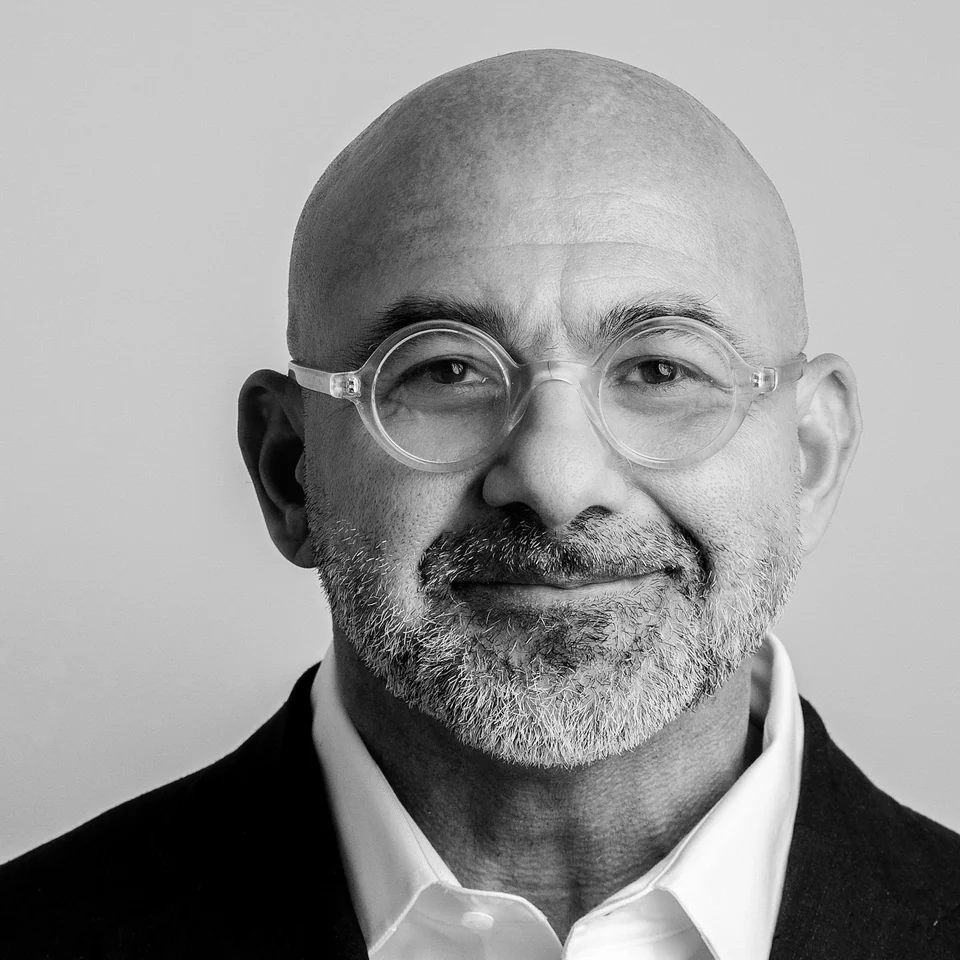
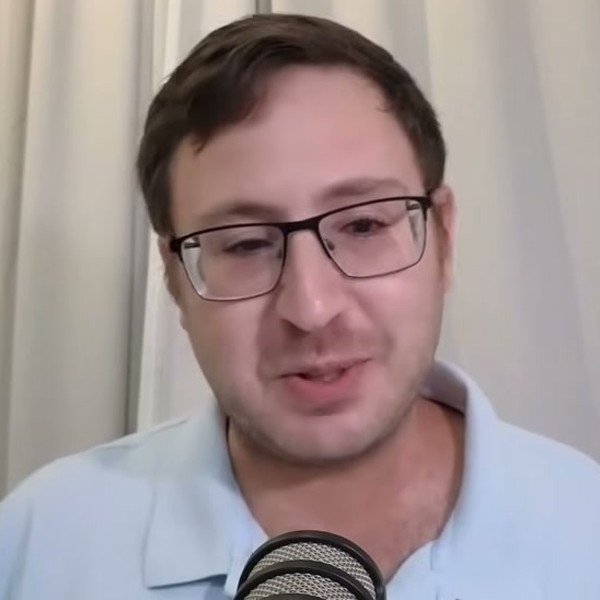 David Reaboi with Ariel Whitman
In this interview
- 1:15Is Trump the last instinctively pro-Israel president?
- 4:38Vance and the Iran MOU
- 8:09Radicalized in the group chat
- 11:39Vance on antisemitism and Tucker Carlson
- 15:07An MOU built to blame Israel
- 19:45Why a Vance administration would be worst for Israel
- 20:50Big tent or true believer?
- 26:36Vance’s wife and the groypers
- 32:04The medium is the message
- 38:34When the party in power loses its mind
- 42:07Why influencers stay silent
- 50:11Treating information warfare like war
- 55:21The Jewish question in Washington
- 57:50Comedians as political authorities
Lightly edited for reading. Click any time to play from there.
Hello, everyone, and welcome to another episode of The Western Spirit, here from Israel. I’m Ariel Whitman, and today with me I have someone who I’ve been following on social media and other places for a long time. But it took me time to finally reach out, and I think my messages went to his spam, but finally we made it happen. So today with me is David Reaboi. David is a writer, political commentator and national security expert who has spent years studying political warfare, influence operations and the ideological battles shaping American politics. And one of his books is called Qatar’s Shadow War, which he published in 2020. So he foreshadowed a lot of what we are seeing in today’s world. So, David, it is a pleasure and honor to speak with you here.
It’s great to be with you. I enjoy your show, and you always talk to smart, interesting people. So here you are, another smart, interesting person.
Is Trump the last instinctively pro-Israel president?
So, David, I want to start off with something that I’ve been thinking about a lot. And it’s a question I’ve asked a lot of my guests from the U.S., which is: President Trump, with all his flaws, is generally, I think, on an instinctive level, maybe you disagree with just the way I feel, pro-Israel, in the sense that he understands from the kishkes, as we Jews like to say, more or less where Israel is, at least. Do you think he is the last president in our lifetimes that will have that kind of natural gut instinct to at least come to understand, at least to not be anti-Israel, if not pro?
Yeah, I think I agree with you about that. I think it’s basically his default position. And it’s his default position because he is fundamentally a boomer, a New York boomer. And he came up in a time when his formative experiences with Israel had to do with Entebbe, the Six-Day War, the Yom Kippur War, the explosion of Palestinian terrorism from the Munich Olympics, on and on, to the Iranian revolution, which, even though it wasn’t necessarily an Israel story, was definitely a story about the explosion of Islamic fundamentalism in that part of the world. And 9/11 and all this stuff. So if you are old enough to have seen the whole movie, you have a different perspective than someone who just showed up and doesn’t remember what happened before. And because you don’t remember, you’re just at the mercy of people telling you. And we’re now in an information environment where it’s just really the Wild West, and there’s no such thing as truth, and it’s just flooding the zone with nonsense.
So I think he may be the last president who comes with this perspective. Look, if Marco Rubio is the next president, or if he runs or whatever, I think obviously all bets are off. But that said, Rubio approaches this issue in a slightly different way as well. I’m not saying he doesn’t feel for Israel in his kishkes the way Trump does, but it’s a kind of different thing. It’s a more intellectual thing, because it’s Marco Rubio. And Marco Rubio certainly knows history, and he’s been involved with these issues for a long time, et cetera. Other folks have not been.
Vance and the Iran MOU
Wait, I want to ask you about other folks. So let’s go to the other folks, which is, we are speaking at the end of July, when we’re recording this, the war with Iran. I’m not exactly even sure where it is now; we can get into that. But we had, a few weeks ago, this MOU. And the vice president of the United States, JD Vance, was going all over the place saying how great it is, how much he’s so proud of it, how he has single-handedly, after 40, how much? The ‘79 revolution. So 40-plus years, 47 years, almost 50 years. He has changed the Iranians single-handedly. JD Vance changed them to be rational players. And it’s very cool, by the way, he says. It’s a cool thing that he changed them. They now understand the error of their ways. He says we should give peace a chance. Then he went on Joe Rogan, after his own boss said that he doesn’t trust the Iranians, and said that basically we here in Israel paid people in America to attack him viciously, and that is what basically brought down the MOU, or at least threatened the MOU. Well, he seemed to think the MOU was still in place when he was on Rogan. You have been speaking a lot about this vice president and his way of looking at things. Can you generally talk, I guess, about what you think happened behind the scenes with the MOU, why Vance was pushing it so much? And it seems he also lectured Israel from the White House podium in front of the entire press, said that Israel must say thank you to President Trump because everyone else in the world hates it, and this and that. So what are we to make of the vice president and of, I guess, his wing of the party at this point?
Well, that’s a very big question. I’ll begin by saying that I was a big fan, for maybe not many, many years, because it hasn’t really been that long, but for a couple of years I was a big fan of JD Vance. I supported him in his election to the Senate, and I was glad when President Trump picked him. And I knew him a little bit, and I knew him to be a thoughtful guy and a smart guy. And I saw him speak at the Quincy Institute. And frankly, I thought it was a great sign that he went to the Quincy Institute and he spoke about the importance of the U.S.-Israel relationship from a position of U.S. national interests, which is something that I’ve been screaming about for many, many, many years. And it’s like, oh, okay, this is actually a better scenario than dealing with boomers and folks who kind of feel it in their kishkes, because this is the head; it’s not necessarily the heart. And the heart can lead you astray. Of course, the head can lead you astray as well, as we’ve come to see.
Radicalized in the group chat
But since that time, I noticed that the vice president fell in, let’s say… I’ll try to put it in the most dispassionate way possible. I think the vice president and many folks out there are victims of what I call rapid-onset elite right-wing social media retardation. It’s not a particularly good acronym, but it’s nevertheless a coherent phenomenon. I’ve seen this phenomenon. I’ve kind of been a part of it. When you are in a cloistered environment, you spend all day in your group chats on social media, in your little beehive of folks who are constantly pushing, pushing, pushing to see who could be more based. This is a radicalization engine. I spent most of my career studying Sunni Islamist movements. I know the radicalization process. It’s not a mystery. It’s exactly this. And when I saw the rapid ideological changes, not just from the vice president, but from the vice president and his cohort and his friends, who I know, and they’re all kind of shifting and moving in this direction, I saw that and I was like, this is actually really alarming. And it’s not alarming because I necessarily disagree with one or the other thing that they’re saying at this point. I just think that it’s alarming because I don’t think it’s safe for America to be led by a bunch of people who are constantly radicalizing and constantly shifting their positions on really important things.
I saw this when it came to the war with the Houthis and that military engagement, and it was a very famous Signal chat that was leaked by Jeffrey Goldberg. We don’t know how; likely just plain old stupidity. But we saw these transcripts about the Houthi war, and the things that Vance was saying literally verbatim were coming out of the Quincy Institute’s Responsible Statecraft. When it came out, I went looking and I found the articles he was talking about, and he was making the case that the U.S. has no national interest, the U.S. has no particular interest in ensuring the free passage of goods through choke points like the Red Sea or the Persian Gulf. Meh. Let someone else take care of it. It’s not our business. Let the Europeans take care of it. It’s not our business. Well, when I saw that, I was like, well, this is definitely another step in the radicalization.
Vance on antisemitism and Tucker Carlson
And then subsequent to that, he came out and he did an interview with UnHerd where he said, no, no, no, there’s no antisemitism in America, and definitely it’s not exploding, and my friend Tucker Carlson is great, and Ben Shapiro was wrong by saying that he doesn’t have a place within conservatism in America. And I thought, wow, this is a serious gaslighting trip that he’s trying to take American Jews on. I mean, he attacked me on Twitter, and I think I was the first right-wing Jew that he attacked on Twitter.
What did he say about you?
During the Twelve-Day War. Well, he called me a loser who supported DeSantis, and I think I got the best of him in subsequent exchanges. But then he went on to attack other right-wing Jews. And it’s really interesting. People are putting things together. They’re putting together the fact that his favorite Democrat is Ro Khanna. They’re putting together the fact that the guy has nothing to say about Graham Platner’s Nazi tattoo, and on and on and on. I think there’s definitely more hostility there than people would like to admit, though it’s complicated.
So look, I think it’s a very bad situation. We can talk about Vance in regards to the MOU. I think that’s where we started, with the MOU, so I may as well hit that. I understand that JD Vance was opposed to the Iran war. I understand that; I actually respected that. I don’t think there was anything wrong with being opposed to the Iran war. And knowing what I know now about the way this administration would fight such a war, I would oppose it as well, to be 100% honest. I don’t think it necessarily had to be that way. But considering what happened since we passed the first 40 days of bombing, and then we went into a ceasefire, and we did 60 days of ceasefire where we gained nothing strategically on one hand, on the other hand, the war was still ongoing without any victory. So we were taking on the water of still fighting the war and getting none of the advantages, which is to say, defeating the enemy. But I don’t begrudge Vance for opposing the war, or really anybody for doing that, for counseling against it.
An MOU built to blame Israel
That said, he popped up, and he shows up with an MOU that was just embarrassing for the United States. And not only that. It’s one thing to say, you know what, we’ve been dealt a bad hand, and we’re trying to just cut bait and get out of here, because we made a mistake and this war is unwinnable, et cetera. Well, okay, so then admit you lost and sort of move on. But instead of doing that, the vice president decided that he was going to ratify Iran’s control over Lebanon, and basically say, hey, if this thing goes south, it’s Israel’s problem and it’s Israel’s fault. And tying those two things together was really significant, because it didn’t have to be done. Obviously that was item number one on the Iranian wish list. But I think it was also item number one on the JD Vance wish list, to say, hey, look, we’re going to make sure that the Israelis are blamed here for this, and we’re going to use this as a wedge to make the American people more skeptical of, or opposed to, Israel. I think that’s clearly what it was, because it can’t be anything else. It literally cannot be something else.
If you wanted to get the best possible deal, if you say, okay, we’re going to get a deal, we want to get the best possible deal for the United States, what would you do? You would say, hey, we want to make a deal, but those Israelis are crazy. So you better make a deal with us, because we can’t control those guys. Give them a bad look and they’ll come and clobber you. So we’re your best bet. That’s something that would have made sense if your desire is, okay, we want to make a deal, we want to get the best deal possible for the United States. You do the other thing, you do what they did, if your agenda is, okay, we just want to get out of here, and we want to make sure that Israel gets stuck with the blame and Israel is holding the bag.
And Marco Rubio, to his credit, blew that whole thing up by running to Lebanon and getting a trilateral deal worked out with the Israelis and the Lebanese. And I have a lot of friends who are analysts specifically on the Lebanon file, and they were saying, no, it’s a terrible deal. So it doesn’t matter what the deal is, but it short-circuited this linkage, which was an achievement in and of itself. And of course the MOU falls apart, because it’s Iran, and they’re not going to keep it, and they’re going to keep pushing. And then Vance shows up, and he doesn’t say anything about Iran, but instead he basically brings up the domestic political point that he’s trying to harness, or the mood that he’s trying to harness, which is an anti-Israel mood. He’s trying to collect all those people who are Israel skeptics and push more people into the Israel-skeptic camp. That was the only reason why he went on Rogan’s show. He went on Rogan’s show to come up with this asinine lie that they placed in Time magazine, that Alex Bruesewitz placed in Time magazine, that doesn’t even make any sense, blaming Brad Parscale for blowing up the deal. This is just nonsense.
Why a Vance administration would be worst for Israel
And yeah, so look, I think that a JD Vance administration would actually be the worst possible for Israel. I think it would be significantly worse than just about any Democrat, because we know that Israel has experience going toe-to-toe with Democrat presidents, maybe not this level of anti-Israel Democrat presidents, but that’s a circle that can be squared. But having the Republican Party be run by a JD Vance, where, at the very least, it would open its arms and welcome and embrace real, real Israel haters, that’s something that would be a massive threat to the U.S.-Israel relationship, for sure.
Big tent or true believer?
David, can I just ask you about Vance, in the sense of what is driving it? Because he went to Turning Point USA and he spoke, I think the day after, if you remember, Ben Shapiro gave the speech. He went after Tucker and after all these crazy people and the podcasters, some people call it, saying that those people should be outside of the tent. Shapiro’s contention is that you don’t just welcome everyone in. You have some sort of ideological boundaries: if you’re a Jew hater, if you’re a racist against blacks out in the open, all these really bad things. It’s just like in, I think, the ‘80s or the ‘70s, when Buckley threw out the John Birch Society. There were certain ideological frameworks where we said, if you’re outside of those, if you’re outside of the Overton window, you’re not there. And then Vance comes in and says, in the speech that he did, I think a day after or the day before, there are no limits. I’m not going to tell anyone not to come be part of my tent. You are all welcome. I have no issues with any of you. That was basically his speech. And so is it a political type of thing? Because when you’re doing that, you basically can’t take any position, because you’re basically saying, by taking a position, I’m going to alienate some people in my tent, quote unquote, because that’s the way life is, but I don’t want to do that, and therefore I have to basically go with whichever position seems to me to be the most popular, because I want as many people to be in my tent as possible. And in his calculation, because he’s online so much, he thinks that that’s real life. He thinks that because on X everyone hates Israel, all the right-wing influencers, so to speak, then he must also be hating Israel, because that’s where the action is. That’s where the votes are. And so the question is, if it’s all a ploy, and I think it’s a bad ploy even politically, because in polls, at least, that’s not where Republicans mostly are… So you think that’s what’s happening? Or does he really have animosity in his heart, let’s say, towards Israel at this point?
Look, I don’t think that this is merely cynical. When I said rapid-onset elite right-wing social media retardation, I think he absolutely believes these things. We saw him go on Rogan and basically embrace, oh yeah, Epstein was Mossad, or he was deep state. It was this, it was that. He called himself a conspiracy theorist, blah, blah, blah.
But then he admits there’s no evidence.
No, no, no. He didn’t admit there’s no evidence. He basically said, yeah, well, I’m sure they got rid of it by now. No, really, that’s what he said. Which is not the same as saying there’s no evidence for this. But look, I think the guy has been radicalized, and the guy absolutely believes it. Obviously, Ben is right when he says that political parties and, let’s say, ideological groupings are groupings for a reason. And if you can’t keep out the people that don’t believe in those things, then they don’t really exist, and there’s no reason for them to exist. And of course, Vance, when he said, oh, just let everybody in, he’s full of shit too, because he doesn’t want to let everybody in. He wants to let in the people who he likes and who he agrees with. I’m sure if Paul Singer showed up, or Ken Griffin or whatever, he would say, no, no, no, not for you. You’re not welcome here. But the people that he finds he agrees with on some things…
Look, I think we’re dealing with a person, frankly, in the vice president… We know he came from a tough family background. And we’ve also seen that this is like his sixth or seventh ideological transformation. He was a Romney guy and he was anti-Trump. And then he was a New Right, Claremont Institute guy, which is when I met him. And then he became a Catholic integralist, blah, blah, blah. And now, of course, many of the new political Catholic converts really, really despise Israel and Jews. Definitely not just Israel.
Vance's wife and the groypers
But how do you explain, David? I want to interject, because his wife is an Indian Hindu. And a lot of these people that are his quote-unquote allies literally hate his wife because of her skin color, her ethnicity, her religion. I think they’d say about people who aren’t Christian that they have no place in America, a lot of these people. A lot of them are flirting with, I don’t know if the word is white supremacy, but like, only whites have a connection: white nationalism, Christian nationalism. She’s not Christian. She was asked in an interview, when they were interviewed together about his new book on becoming Catholic, whether she would convert, and she said, no, pretty much; I’m happy where I am. So they really hate her, his own wife, the mother of his children, and congrats, he has a new child. And so I don’t even understand, personally, how you would be so comfortable with people who literally hate your own family, who, on an ideological basis, do not accept your own wife and children to be part of the American experiment. I don’t know if you want to respond to what I’m saying. It’s okay.
Yeah, yeah. Look, I think the mistake there is to imagine that he thinks of himself as part of this movement. I don’t think he thinks of himself as a groyper. I think he definitely dislikes Nick Fuentes for all of the attacks on him and his wife, et cetera. I think that’s true. But if you look at Vance’s buddies, Tucker Carlson at the top, I mean, Tucker Carlson is the first one: oh, no, no, no, I don’t hate all Jews, blah, blah, blah. And I think it’s very easy to rationalize things, and I think there are certain people who are much better at that than others, if you have a career in politics. A friend of mine described someone as being very comfortable with self-delusion and very desirous of money. And you put those two things together, and it’s really the self-delusion that’s the thing. So, look, it’s not my argument that JD Vance thinks of himself as part of this big political movement, certainly not that he’s the leader of it. But there’s definite crossover on a number of things.
Yeah. I mean, you saw the New York Times reported, was that the New York Times? Well, regardless, I think maybe the viewers will remember when Susie Wiles called JD Vance a conspiracy theorist. And then even Vance himself admitted that he went down every rabbit hole of the Charlie Kirk conspiracy, that his wife was worried about him because he’s staying up and he’s going down… and he was the vice president. So my question was, I heard that, and I was like, so who do you think did it?
Yes, exactly. Like, what was that theory? Maybe he watches Candace a lot. Look, clearly now his friend Tucker Carlson has no problem saying that it was the Jews who did it, and many others. But is that what he thought? What convinced him that that’s not true? Look, forget about how he feels about Israel. How he feels about Israel is a tiny subset of the fact that he’s a conspiracy theorist who believes a lot of things that are not true and are insane. And that, to me, is a lot more important. I would rather have a president or vice president that didn’t believe in conspiracy theories and nonsense, or who at least says, okay, that sounds weird, and this is really weird and unexplainable, but what is it that I can prove? And then proceed that way. Like, that would be a really cool thing. That would be, I think, frankly, kind of minimum, as opposed to…
You’re asking for too much.
The medium is the message
Yeah, yeah. But on the other hand, going back to the original question, I do think, sadly, tragically, we’re in a place now where the next generation is going to be a lot more open to conspiracism, because they just haven’t been taught to think, and they’ve been propagandized. Marshall McLuhan famously said, the medium is the message. And what he meant by that was that every medium, whether it’s television or the internet or the printing press or whatever it is, has its own characteristic imprint that defines how people arrange the thoughts in their head, defines how people see the world, how people process information, et cetera. So it’s not necessarily that TV will make you believe X; it’s that TV or the internet or social media will make you think like X. And social media, as we’ve learned, is very, very closely tied to conspiracism, and to getting people to believe things that are not true and that are not provable, the things that don’t make sense.
And it also amplifies crazy people. In the old days, they would be on the street corner begging for change and screaming crazy things in your face at some subway station in Brooklyn, where I grew up, and now they’re online making money by saying the same exact things they would say at the corner begging for money. Now they’re doing it online and making money off it. In the beginning, we saw the internet was going to be so great: everyone had a voice. But it turns out some voices are so crazy that people find them interesting, and then they get amplified. And the crazies are the ones pushing all this. And we’re constantly trying to debunk the crazy claims, so you don’t even have time to talk about the real stuff. A lot of times, it’s just a very sick way we’re doing things now. I don’t even know how to fix it. Maybe it’s not my place to fix it.
Yeah. I think that, more than anything, the biggest problem is the actual timeline itself and how it works, and the fact that really every 24 hours, it just changes completely, and it wipes away the past, and it’s only moment by moment. And that act of wiping… The idea of truth is building a record. In order to correctly assess something that happened in the past, you have to be able to go and reconstruct and build a narrative, and allow people to go back and point at old things. But the nature of the timeline itself is, it just keeps moving. So that prioritizes, or that benefits, people who are lying, because the lie will just move on, and the correction will also move on.
So we’re off topic a little bit, but maybe not. I want to ask you this other thing that’s coming to my mind as you’re talking. I didn’t even think of asking you this, but it seems to me, if we take all of these podcast bros, and some gals, the basic direction that they’re trying to push… It seems to me to be almost coordinated, because they’re all saying the same things. They’re basically saying to people who are listening to them: America is bad. Everything that’s happening is bad. Everything we do is bad. Your life is not in your control. There are some forces outside of your control that are controlling the fact that you can’t make money, that you can’t get on in life, that you can’t find love. That’s where, I guess, the manosphere comes from: a lot of lonely young men. But it has to do with every facet of your life that isn’t going well. It’s not you. It’s the system, and everything is bad, and there are people that are controlling it. And this obviously usually leads to the Jews. But putting that aside, it’s almost like they are doing everything in their power to do the exact opposite of what conservatives used to say in America when I was growing up. What we used to say as conservatives was, pull yourself up by your bootstraps, take responsibility. Whatever the government and the people put up to you, it’s your responsibility. You can do it. If you just put yourself to it, the American dream is open for you. And basically what all these people are saying, under the guise of conservative talk media, is, no, no, no, you have no agency, zero agency. Which is why, by the way, I think a lot of them are being pulled to the Palestinian cause. The whole Palestinian cause is to say the Palestinians have no agency: it’s the Jews, it’s the West, it’s colonialism, settler colonialism, all these types of things. But that’s a side issue. I think, just in terms of the healthy way people should look at the world, they’re basically pulling everyone to such a dark place. And I wonder, first of all, do you agree with me that it’s almost the exact same basic framework of looking at the world that they’re pushing? And whether you think it has political implications, in the sense that they’re all doing this while the Republicans have control of the presidency and both houses of Congress, and they’re telling them that everything is bad, you shouldn’t even vote, because everything is rigged anyway.
When the party in power loses its mind
So I’m glad you brought up that part at the end. Look, I agree with you completely about the other stuff, but the part at the end, that’s the money shot, because that explains the rest of it, I think. So a few years ago, I noticed that this was the first time, to my knowledge, in American political history where… Usually what happens is the party out of power goes crazy. And we saw this with Bush and the Iraq War. We saw it, frankly, with Clinton and the GOP. We saw this quite a bit with the GOP and Obama. And then, of course, the Democrats under Trump went completely crazy, and they’re still crazy. Right. But this is the first time that the in-power party is losing their minds. And when I first saw this happening, that’s when I was scratching my head. I was like, this is really, really bad. This is very, very bad.
I think that, look, the number one issue, as far as I’m concerned, in America… I’ve been an immigration restrictionist for as long as I’ve been in politics, and mostly that was my one issue. But it’s no longer that. I think by far the more important issue is the cognitive one, the issue of cognitive health. And if we can’t figure this out, and we keep going and circling the drain of retardation… Look what just happened, ripped directly from the headlines. We saw a completely fake, completely manufactured, insane controversy about the National Defense Authorization Act supposedly merging the IDF with the U.S. military, which is obvious nonsense. But it was the kind of cheap, gutter propaganda that the Soviets would do, or that people would do in failing societies, because it’s so stupid and so devoid of evidence, of logic or anything, that you wouldn’t have the chutzpah to even try it in a sane society full of normal people. But the fact that you have millions of Americans who are believing this… and you know what, I have friends who are telling me, oh my God, people in my real life are asking me about this as if it’s a real thing. I just scratch my head and I just say, we’re doomed. If this is the kind of thing that’s happening, it’s really bad.
Why influencers stay silent
So you have that happening on one hand. And then on the other hand, I was shocked that you never see the Trump administration come out and say, guys, this is crazy, you’re being completely mental, this is nuts. What about all the websites, from Breitbart to the Federalist, to here, to there, being like, guys, this is crazy, this is an insane mental trip, and it’s a fake story? We don’t see that. And the only reason that I can think of that we don’t see that is that the people are afraid. The people who are running websites, who are influencers, and I don’t mean the people who are just paid to say bullshit, I mean the people who actually do influence people, people who have shows and who have large audiences and whatever, I think they’re looking around and they’re afraid. They’re afraid to get on the wrong side of a lot of people in the audience who are out of their minds.
And by the way, Nick Fuentes actually came out and said, this is crazy. He also says he wants to become a Jew now. He’s envious of the Jewish people, because the antisemitic movement, which he says he’s part of, is full of crazy nutcases, and the Jews have all the good talent. In a way, sometimes Fuentes says the quiet part out loud that the Tuckers and all of these other people are so scared to say. And he’s like, no, no, no, we hate the Jews, and all you guys are so crazy that maybe we should stop hating. It’s like reverse psychology. And a lot of what you’re saying is, they’re so crazy that even to hate the Jews, they don’t know how to do it the right way.
Right, right.
Does that make any sense?
Yeah, yeah. Look, I think Fuentes is more talented and more intelligent than anyone else in his particular group. And it’s like he gets things sort of almost right. I mean, he’s the only one that can speak about geopolitics in a way that’s not… I mean, it may be wrong in some respects, but it’s not retarded. It’s not stupid. And it’s like, hey, if I was listening to Nick Fuentes giving me predictions of what’s happening after October 7, or I was listening to Jeffrey Sachs or John Mearsheimer, Fuentes would be the one, of those two, who actually would predict and who would see what’s happening.
But yeah, look, I think we’re in a situation where… I’ve been in this business, or this environment, or whatever you want to call it, for a very, very long time, and I’ve known a lot of people in this thing. And even years ago, I had people kind of confiding in me and saying, I would love to speak up about X, but I know that it would cost me my audience, and I’m not going to do that, because it would cost me my audience. And it’s like, oh, well, okay, I get it. But what you’re saying is you’re living in fear of the people that you’re trying to rile up. I don’t envy people in that position. I know I will never get into that position myself, because I’m too much of a contrarian. I’m addicted to finding the one thing I disagree about with people and sort of pushing on that. But yeah, that’s a dynamic. It’s a dynamic of the social media age that really didn’t exist before. And obviously, it’s not good.
I mean, how many people out there who do know better, I know because these are my friends and ex-friends, who have not opened their mouths, who I know are troubled and disgusted by the amount of anti-Israel, antisemitic stuff that’s happening online? How many of those people have not said a word because they don’t want to get involved? They don’t want to get clobbered. They don’t want to lose cred. It’s a lot. It’s a lot. And do I respect those people anymore? Do I speak to them? No. I think there’s a minimum, just for me, as a Jew, as an American, as someone who believes in saying things that are true and not biting your tongue when it comes to this stuff. I just don’t have respect for people who chase the crowd like that. So that’s what it is.
And yeah, look, it’s a sad thing. There are a number of things you said that I don’t even know how to fix, some of the cognitive decline. I have some ideas about how to deal with the proliferation of hostile foreign information operations on social media. But to tell you the truth, it’s not something that the Republicans or the Democrats seem to have any appetite whatsoever for tackling, because, sadly, both have their own agendas here. The Democrats, they just want to censor. And we saw this during the Biden administration, specifically when it comes to social media and COVID and things like that. The way they see what’s happening on social media, they say, okay, how can we use our power to limit the speech and the freedoms of American citizens, because it’s dangerous? And I say, okay, that’s what you want to do. The Republicans, on the other hand, look at it and they say, well, these crazy people are our people. The Russian bot farms and all of this stuff, well, they helped us win in 2024. Even if they didn’t literally send pro-Trump bots, the churn, the free speech scrum of everything, that includes the bots, that includes all the fake and craziness, that is something that benefits the Trump administration. It benefits Republicans, they think, superficially. So they’re not going to do anything about it.
Treating information warfare like war
So we’re in a situation now, I think, where we’re just sitting around, and we’re unbelievably vulnerable to the cognitive assault on social media and through information operations. I’m soon going to put out a report on what I think can be done about this. And I think it’s very clear: you have to address it as if you were addressing a serious problem with the military and with intelligence. When it’s happening from abroad, you need to target the people who are meddling from abroad. And that means you don’t say, well, look, here’s a whole bunch of bot farms, and we’re going to sue random GRU guys one through 25, and of course nothing will happen, and maybe we’ll disrupt some bot army that’s just a little drop in the ocean, and then that’s it. I think you have to take this stuff as seriously as people take the kinetic war, because that’s what it is. We’re at the point now where the way we understand the world is being driven by hostile information campaigns that are happening abroad. And we’re vulnerable. So I think we need to do something about it. And to the extent that we don’t, it’s just going to be very, very bad.
I agree. Last question, because we’ve talked for so long and I want to ask you one. I was going to ask you a bunch of things about Qatar and everything, but you’ve basically talked about the danger in general of foreign actors basically interfering in America’s information war, and the way Americans also consume their information. And I think this can also be pushed out into other fields, such as higher education, but even lower education, by the way: high schools, et cetera. We know that there’s a lot of crazy stuff. We’ve done a few episodes on this being pushed onto the elementary school level in America, real propaganda in terms of the way they look at history, the way they look at America itself, all this kind of stuff. But about a year and a half ago, I think it was Rod Dreher, who I’m sure you know, wrote… and he actually is a friend of JD Vance, or he says he’s a former friend, because JD Vance stopped talking to him after he wrote a critical, it wasn’t even critical, he wrote that basically Vance has the unique position to rebuke these crazy, hateful people, and Vance didn’t speak to him since then, which is mind-boggling in a lot of ways. But that aside, he said that someone told him, within the administration or Capitol Hill, that, I think it was, one-third of staffers for Republican congressional people, Senate people, the White House, are groypers. I don’t know if there’s such a thing as an official groyper, but they at least agree with the general philosophy of the groyper movement, whatever that is. On the other hand, and just help me understand this, maybe, contradiction: the Republicans seem to be more immune to this craziness, in the sense that you at least have the establishment, or at least part of it, trying to fight back against this crazy takeover of at least some of the party. So you’ll have governors speaking out about it and not letting crazy people into some of the conventions. You’ll have people like Ben Shapiro and Dana Loesch and other of these very popular hosts who are pushing back on it. You’ll have even President Trump, maybe not as strong as we would like, saying, kooky Tucker Carlson, crazy Megyn Kelly. These are things that, on the Democratic side, no one will say, on the top levels, against Hasan Piker and Mamdani at this point. But on the other hand, like we said, so many of the young people are there. So how much do you think of the Republican Party is actually aligned with the people who are trying to fight back, and how much are they really of the crazy people? Obviously not numbers, because we can’t really know, but roughly speaking, how much is it taking over?
The Jewish question in Washington
Look, as you said, I don’t think it’s a thing that’s exactly knowable, but we can see from trends. We can see what people are listening to. We can see what people are thinking, what people are saying, and we can see anecdotally. I have a friend whose name everyone would know who, a year and a half ago, came back from D.C. and called me up, and he was like, dude, I can’t believe it. I was just in D.C. for several days, and everyone under 40 came up to me, and the only thing they wanted to talk about was the JQ. The Jewish question.
What’s the JQ?
The Jewish question.
Oh, the Jewish question.
Why do the Jews have so much power? Why do the Jews have so much money? And he’s not Jewish, and he was scared. He was like, this is really crazy. This is a serious, serious problem. And when I saw that in Rod’s piece, whatever, a third, I thought that it’s probably low. It’s probably low. It’s one of those things that, as Hemingway said about going broke, happened slowly and then all at once. And that’s really what happened. I think that 2023, 2024 was the big time where this happened. And we can go into that. I can talk about that for hours.
We’ll do another episode just about…
Yeah. Look, I think it’s a period where a tremendous amount of changes were happening in the online information space on the right, and I don’t think any of those changes were good. And frankly, a lot of it was created in order to get Trump through the primary.
Was Trump worried, you think, about not getting through the primary? It seemed like he had it all wrapped up very quickly, actually.
Comedians as political authorities
When the online infrastructure was built to push Trump through, that was when he was doing poorly. Obviously, when he was already 20 points ahead, after he was indicted and the whole thing, by then it was all over. But really, what happened throughout those years, specifically 2023, 2024, just complete insanity. And that’s also when you saw the rise of the Rogan wannabes, the Theo Vons and the Tim Dillons and people like that. These people had big audiences, but I think something happened. There was a switch, and something happened when these people began to speak about politics as if they were real authorities to speak about politics. That was not a thing that had happened before. And during that time, what you saw was that anyone who had any kind of expertise in anything in the right-wing media ecosystem was just pushed aside. And the people who were promoted and the people who were embraced were people who literally know nothing, just empty vessels. And they revel in the fact that they know nothing. They’re proud of their know-nothingness.
That’s another thing, which maybe we can do another episode with you about. But in a lot of these spaces, because of maybe COVID and other things, we said, don’t trust the experts anymore. But then we went a step further and said, trust the people who are not experts in anything. So, okay, don’t trust the experts, check everything for yourself; that’s all fine. But the leap was, now trust the comedians about geopolitical, medical… Okay, you don’t have to trust; get second opinions, read up yourself. No, no, no. Don’t read up anything. Trust Theo Von about geopolitical stuff while he’s smoking a joint somewhere. And I think that is a lot of the right-wing media ecosphere. Maybe it’s not even right-wing, because if you think about it, and just to finish it off, because the viewers will leave, we’re talking too long, but I’m saying a lot of these people are not what we would have considered, ten years ago, the traditional Republican base. They’re more of the people that came onto the Trump train. Joe Rogan was a Bernie supporter, and Theo Von, I don’t think, had any interest in politics. And so a lot of these people are the people who came along because the left went so crazy, but now they’ve basically brought it with them to what we would maybe consider the right. Tucker is unique in that sense, because he comes from the more establishment, maybe, right, and has become a crazier person than the Theo Vons, at least in the ideas that he puts forward. And I think objectively he’s crazier, just as a human.
Well, what I think is, I think the way you defined it was the way I saw it for most of the time. And then it clicked, and I realized that it’s a lot more basic and elemental than just saying, you know what, I don’t trust the experts. I think what it is, is that at a certain point people said, wait a minute, I’m a lot more comfortable listening to people who are dumber, or as dumb as I am, because, frankly, it makes me feel less than, or inadequate, to listen to Ben Shapiro or to someone else who’s obviously more intelligent than I am. And so what it comes down to, I think, is that it’s like, who are you, smarter person, more educated person, more informed person? Who are you to tell me anything? And I think that’s definitely the very clear subtext of what’s happening on the right.
Yeah, it’s a good explanation for a lot of these people, because there would be no other logical explanation for people to listen to a comedian and literally form their opinions from a comedian talking about… I actually love comedians. We all love laughing; we’re Jews. But what does Theo Von know about Israel and the Middle East? You don’t have to agree with Ben Shapiro. You could listen to, I don’t like him at all, but a Peter Beinart has way more knowledge about this than a Theo Von or a Joe Rogan. But these people will go to the comedians to get their info.
Well, yeah, that’s what I’m saying: they’re not running to a Peter Beinart or a Rashid Khalidi or whatever. They’re running to idiots, and people whose brand is like, hey, I’m no smarter than you are.
Exactly. No, and I might even be dumber than you are.
Right.
Exactly, exactly. David Reaboi, I have to say that I really enjoyed the conversation, and at the end there was stuff that we could do; I would love to continue this in another hour. But for the meantime, it was a lot of fun, illuminating on a lot of the interesting stuff we talked about. We can talk, hopefully next time, about Qatar and their influence, because your book was in 2020, when they were on no one’s radar in terms of the public discourse, and now they are, big time, at least for people who are honest with themselves. A lot of these people, like you mentioned, Alex, whatever his name is, Bruesewitz or whatever his name is, he’s attacking people from Israel giving money. Meanwhile, Qatar is buying off all of the conservative media sphere, it seems to me. And you can see that, by the way: people who went to Qatar for the race thing, they basically paid for hotels, trips, lavish, extravagant parties there for all these conservative influencers.
Exactly.
Anyway, it was a lot of fun, David. We will have you back on. And I tell everyone who’s watching, obviously, if you can, buy David’s book, even though it’s from 2020; it’s still relevant. And follow David on X and wherever else, and the Substack, which is, I think, where you write your longer stuff.
Yeah, I will be having a lot more coming out this week. And it’s possible that the new short book will be ready to purchase by the end of next week as well.
Great. And we’ll put the links in the description so everyone can go and follow David and read David and buy his new book, God willing, as soon as it comes out. We’re not going to do any spoilers here yet. So, David, thank you so much.
Thank you. Great to be with you. It was fun.