How Russia turned a lie about Epstein into a weapon
Seth Leibsohn talks with David Reaboi about The Epstein Conspiracy: the one discredited source behind the Mossad story, how it was laundered, and why Moscow wants Americans to believe it.
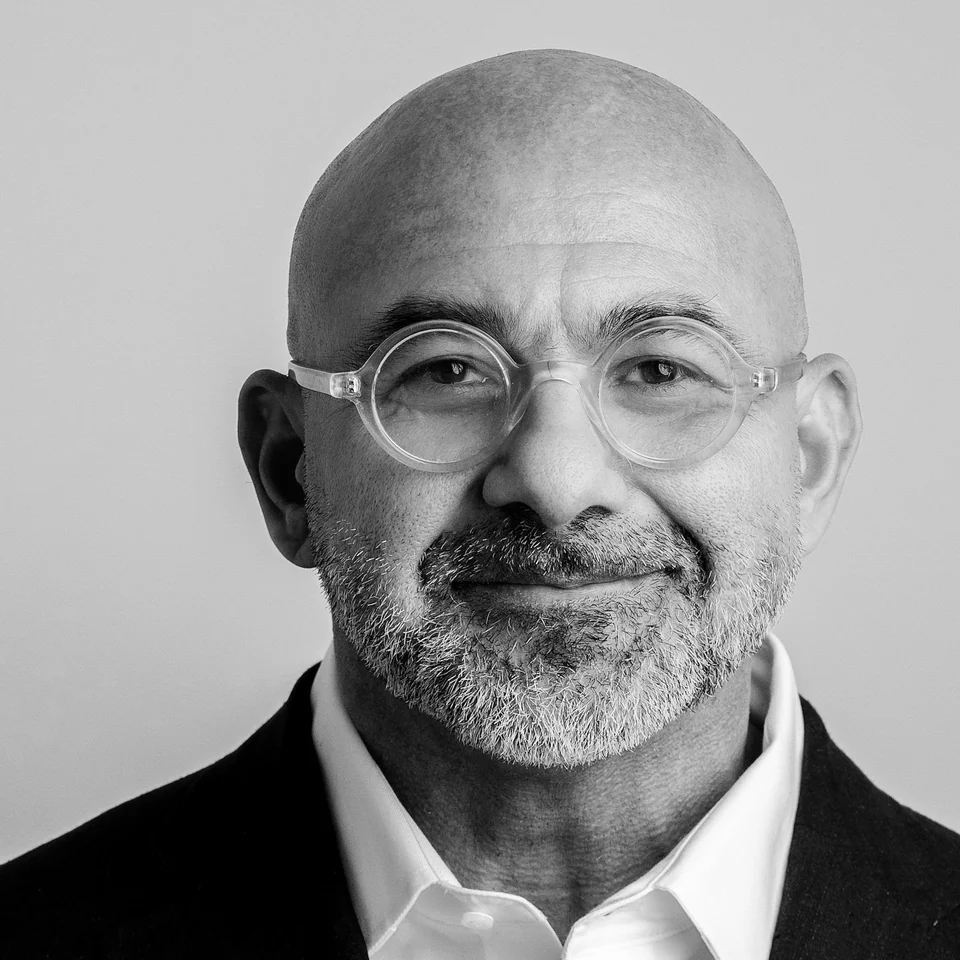
 David Reaboi with Seth Leibsohn
Clips
David Reaboiwith Seth LeibsohnOct 20, 2026
“It all traces back to one interview and then subsequent follow-up interviews from a man named Ari Ben-Menashe.”
David Reaboiwith Seth LeibsohnOct 20, 2026
“If you had to say what else the book is about, the book is about source laundering.”
David Reaboiwith Seth LeibsohnOct 20, 2026
“It’s not going to change how they understand the world, whereas the Jew obsession absolutely does.”
In this interview
- 0:10Jelly Roll Morton’s birthday
- 4:14Why write this book
- 8:03An obvious information operation
- 10:41A lie about Epstein, not his crimes
- 11:50One source: Ari Ben-Menashe
- 14:56The Samson Option and Robert Maxwell
- 17:01Source laundering
- 18:01Why Russia wants this
- 21:49Information warfare as Russia’s weapon
- 25:32From the Protocols to Dugin
- 30:22Putin, Hamas and October 7
- 33:42Why people spread it
- 34:27Why it is not a prejudice
Lightly edited for reading. Click any time to play from there.
Jelly Roll Morton’s birthday
Welcome back as we head into our final hour. It is a delight to do so with a longtime friend, someone who hasn’t been on the show in a while, mostly because he was working on the book that was just published this week. The book is titled The Epstein Conspiracy: How Russia Turned a Lie About Jeffrey Epstein into a Weapon Against America, Israel, and Jews. The author, our guest, is David Reaboi, who has been a guest many times before and is an expert in many things. As the biography on the book puts it, he has for many years followed a single question: how hostile powers can shape what Americans believe through weaponized information. That has been a passion of mine as well, as many of you know.
When David is not busy pursuing that question, he is training his dog, Miles, or you can find him playing upright bass in smoke-filled rooms like Blues Alley. Which makes today’s interview so very propitious, because it is Jelly Roll Morton’s birthday. David, welcome back.
Oh, my God. I did not know it was Jelly Roll’s birthday.
That’s why I scheduled it for today. I had to.
Fantastic. It’s funny, because when you’re first getting into jazz, it’s very hard to take a chronological approach. Jelly Roll’s amazing records—aside from the Library of Congress recordings, which are incredible—the records for which he became famous were from the mid to late twenties. For a lot of folks getting into jazz, with that sound quality, it sounds like space music; it’s very hard to relate to. But I came to it through Charles Mingus. As soon as I got Mingus, I went back to Jelly Roll and thought, oh my gosh, this is really heavy stuff.
He was absolutely legendary. He was criticized a little bit—maybe more than a little bit—for claiming he actually invented jazz. If that was overblown, he certainly had some bragging rights. He was certainly a founder of the American jazz genre. I think there’s no question about that.
I agree, absolutely. His compositions are wonderful, and his conception of ensemble playing with the Red Hot Peppers is amazing. Not to mention he was famous for what he called the “Sephardic tinge,” which he said was a key ingredient. He was one of the early synthesizers of Jewish music and American black music.
And that concludes the cultural segment of this interview. We can redound back to it as we may want. I want to talk to you about your book. The last time we talked, I think you were just undertaking this work. The book is The Epstein Conspiracy; you can get it at Amazon.
Why write this book
I suppose I should start with this. Some years ago, Abe Greenwald at Commentary made a very good point about the times we live in: that we live in an age of bipartisan, institutional, cross-cultural fabrication. Everyone is lying all the time, and about whoppers—big things. We can talk about Joe Biden’s mental acuity. We can talk about COVID. We can talk about so many things. And we have become used to it. To quote a Russian, we have gotten so used to it that we can no longer distinguish between truth and lies. That is a very dangerous thing, not just for our republic but for its perpetuation—for our youth. Tell me why you decided to write this book.
I agree with you, and I agree with Abe, that we’re living in a time when everyone is lying. And at the end of the day, we’re an open society. We’re a republic. This whole thing depends on knowing things that are true and deliberating on things that are true. Once we get to the position where we have no idea what’s true or not, or even whether it matters, things start going sideways in many ways. That happens in an individual’s life in the same way it happens in society more generally.
But getting a little closer to this example: there are things that are not true, on one hand, and there are things that are not true and also really damaging, on the other. There are things we all think that may or may not be true, and at the end of the day that’s fine; it’s insignificant. But our enemies—specifically the Russians, for many, many decades—have understood that the types of lies injected into the American bloodstream, or the bloodstream of any society, matter. There are lies that can disfigure people’s cognition, and they can disfigure society and the way government runs.
An obvious information operation
So, coming to this specific case. Before I wanted to write about it, I was curious. I would see a lot of talk about Epstein being Israeli intelligence and Mossad. At first I looked into it and dismissed it, because there was literally no real evidence there. Then it kept being amplified, and amplified, and amplified. And I thought, okay, this thing went from zero to sixty very quickly. I’m going to dig into it and see how this story was created, how it blew up and how it got to be everywhere. As soon as I started pulling the strings, my jaw hit the floor, because it was revealed to be a very, very obvious information operation.
Someone posted a review of the book today that I noticed on Twitter. It was a positive review, and I thought it was interesting that he made the point that my title, and the book itself, are very precise. It deals with a lie about Jeffrey Epstein—not with Jeffrey Epstein’s whole life. And of course the bad guys, or people without reading comprehension, will say, “Oh, look, they’re saying Epstein was working for the Russians,” or “they’re saying the whole Epstein thing was fake, a hoax.” Which, of course, is not what I’m saying.
Pause it right there. Let me take the commercial break, and we’ll pick up on all of that, to give you the full-throated ability to renounce the straw men that will be coming at you.
A lie about Epstein, not his crimes
As you were making the point before the break, David, this is not a book that in any sense is trying to rehabilitate the character or the biography of Jeffrey Epstein. It is not a book that says the great crimes and abuses he has been alleged to have committed did not take place. You do not question that. Yes?
Yes, I don’t question that. Exactly. This deals with a very, very specific claim: that Jeffrey Epstein worked for the Mossad—specifically, that he worked for the Mossad to blackmail America’s leaders into serving Israel. Which is exactly the claim you see being spread.
One source: Ari Ben-Menashe
And I traced it. This is really the crazy part. Initially I thought, okay, this is an internet conspiracy theory. Then I looked into it, and I found that it all traces back to one interview, and subsequent follow-up interviews, from a man named Ari Ben-Menashe, who is probably the shadiest person any of us will encounter in our entire lives. He is a former Israeli military intelligence guy. He was never with Mossad, and he was pretty much kicked out of Israeli intelligence for having psychological issues in the eighties.
He’s a Canadian arms dealer. Let’s start there.
I don’t even know that. We may not even know that. He’s Canadian; he’s lived in Montreal for a few decades now. But we don’t know whether he’s an arms dealer. What we do know is that he’s a hired gun when it comes to making up fake stories for clients who are almost without exception affiliated with the Russian state or with the Wagner Group—Russia’s state-sanctioned Blackwater.
Their paramilitary, if you will.
Right. For example, he’s got contracts with Haftar in Libya. He’s got contracts with Mugabe. Basically any horrible African warlord, he’s there. Interestingly enough, right now both he and former National Security Advisor Mike Flynn are working as lobbyists in Serbia for the pro-Russian side.
Anyway, he shows up three weeks after Epstein is dead, on an obscure podcast, and he says, yes, Epstein was Mossad. “I met him in Robert Maxwell’s office. Their whole mission was to blackmail powerful Americans and American officials on behalf of Israel.”
Like a honeypot operation.
Honeypot, right. And: do you have any evidence? No. How do you know? “Well, I was there with Epstein and Maxwell.” Of course, he’s the only one still alive, so he can say anything he wants about that meeting.
The Samson Option and Robert Maxwell
So I was scratching my head—this guy sounds familiar. I went back, and I fell off my chair when I saw that this guy, in 1991, was the original source for Seymour Hersh’s book The Samson Option, which alleged that Robert Maxwell was Mossad. Also with zero evidence. In the same way: “Oh yes, we worked together.” What’s your evidence? “Oh, we talked a lot in his office.”
Two weeks after The Samson Option comes out, it’s all over the media. Robert Maxwell was a very wealthy media tycoon in the UK, and after this came out, he said, “No, I’m not Mossad, and I’m going to sue you for libel.” Unfortunately, two weeks later he was found dead off his yacht, so he never got to sue anybody.
The next several years found Ari Ben-Menashe feeding his story about Maxwell into as many books as he could get his hands on, and two of those books, by Gordon Thomas, became super famous. I read Gideon’s Spies by Gordon Thomas years ago. It’s probably the best book on the Mossad if you don’t care about accuracy but you do care about readability. It’s something like 800 pages, and it’s a really good read. Unfortunately, it’s all based on Ari Ben-Menashe, so it’s complete nonsense. They also did a book called Robert Maxwell, Israel’s Superspy.
Source laundering
It’s fascinating: what this guy does professionally is go around feeding weaponized nonsense. He knows exactly what to do to inject it into the bloodstream so that he can disappear—because his credibility is pretty bad—and the story keeps going on its own. He did exactly this with Robert Maxwell, Ghislaine Maxwell’s father, and then he did it with Epstein. In the book, I trace how he did it. If you had to say what else the book is about, it’s about source laundering.
We’ll get to that in just a moment.
Why Russia wants this
Why is it in the interest of the Russians, or the Russian government, to spread this conspiracy? What stake did Russia think it had, or what benefit did it expect, from propagating it?
There are many reasons. Honestly, the top reason is geopolitical: the United States and Israel ran the Russians out of the Middle East. They did it last in Syria. But really the United States did it—Henry Kissinger did it, in the seventies, and that solidified with the Camp David Accords.
Let me pause it there. It’s a big question with a bigger answer, so let me take the break, and you’ll fill out the rest of that answer when we come back.
I’m asking, David, why Russia would find it beneficial to do this. The first reason you gave was that Russia had been licking its wounds since its forced exit from the Middle East, starting perhaps with Richard Nixon and Henry Kissinger in the 1970s. The Soviet Union had a great deal of interest in the Middle East, obviously, which is why the KGB created the PLO in the first place. So Russia sees its influence in the Middle East fading. That’s part one. Keep going.
Sure. From the Russian point of view, Russia understands us as its adversary, whether we understand it or not—contra Tucker Carlson and J.D. Vance and several of these other folks. Russia is absolutely our adversary, and they understand themselves that way, which should be enough for us.
Today Netanyahu said something really on point and very simple. He said Israel is not only America’s great ally; it is literally America’s only ally that fights. And that’s absolutely true. Think about Europe, and the sad state of the militaries in Europe, despite all the money. There’s really nobody else. You saw the Twelve-Day War: the U.S. Air Force and the Israeli Air Force flying together. No other country could have done that with that level of confidence and professionalism. For the Russians, upsetting that relationship is extremely, extremely valuable. So there’s the geopolitical, strategic reasoning.
Information warfare as Russia’s weapon
But there’s also a deeper reasoning, which gets to the second part of the book: the Russian ideological part. They are very aware that they can’t go up against the United States. They can’t match us in military power or economic power. So the only thing they can do is use asymmetric means, and by far the most potent asymmetric means is information warfare.
And they have a situation now where we’ve got social media, which is very easy to game. Over the last several years—since COVID, since 2016, begin it wherever you want—we have a lot of disaffected people in the United States: people who, because of the way our media has behaved and the way our government has behaved, have really lost faith in some of America’s institutions. In many ways I don’t blame those people. But from the outside, Russia can use information warfare, specifically on social media and in podcasts, to push on that—to make skepticism of American institutions flip over into antagonism toward America. And that’s what they’ve done.
And in this way they can wield a strong lever against Western civilization, or Western superiority, it seems to me, by exploiting the disaffection you speak of within America—particularly among our young people—using an expertise Russia does have, which is knowing how to exploit antisemitism. Let me work on that with you when we come right back.
The lie is not that Epstein committed great crimes against people. The lie is that he was an agent of a foreign country—in this case, Israel. David, Russia has few abilities to challenge the West, but as you put it in the previous segment, one of them is information war. And one of Russia’s longtime areas of expertise is antisemitism. Was this the marriage of those two kinds of expertise—seeing America at its most disaffected, with its youth, and then finding the thing they know how to do very well to push that disaffection further?
From the Protocols to Dugin
That’s absolutely right. The Russians have been the masters of antisemitic conspiracy theories going back to the Protocols of the Elders of Zion, which was based on a French forgery but achieved its fame because it was created and promoted by the czars, around the turn of the last century. What is it? It’s allegedly the meeting minutes of the Elders of Zion, a group of powerful Jews who supposedly run the world. Obviously it’s completely fake. It’s ridiculous to read if you know anything about Jews or Judaism. But it was enthusiastically believed. Even Adolf Hitler said, oh yes, it’s totally fake, but it’s a useful fake. And I think a lot of people see things that way.
As a matter of fact, Aleksandr Dugin—it’s hard to know exactly what to call him; maybe a philosopher, a propagandist, and definitely an anti-American Russian ideologue—wrote a whole book, finally published in 2005, though parts were written earlier, called Konspirologiya. It has never been translated into English. I found it and translated excerpts, and they’re in the book.
The case he makes is that conspiracy theories are uniquely powerful at breaking the spirit of a people: making them doubt reality, misunderstand cause and effect, become paranoid and despise their own country. And of all the conspiracy theories that damage people, by far the most potent one, Dugin says, is antisemitism. It reaches back into something primordial and archetypal in the cultural psyche of both the East and the West. People see it as good versus evil. And it doesn’t take much to rile people up and convince them that, in fact, they don’t run their country—that their country is occupied by a bunch of Jews who control things.
What Dugin wanted was to get patriotic Americans to despise their own country and to look to Russia, or to America’s enemies, as allies against the corrupt Jews who supposedly control America. He understood he’s not going to flip Americans into being pro-Russia overnight. So he has to tell them a story, and that story is: you’re not actually in control of this country. This country is controlled by a bunch of Jews, and they hate you, and they want to kill you. And how do they control the country? Well, here you go: you’ve got Epstein, and he’s blackmailing people. It’s a ready-made explanation that fits exactly where Dugin and the Russians want to go. It fits perfectly.
Putin, Hamas and October 7
And people say, “Well, Putin doesn’t hate Jews.” I think people are completely missing how the Russians understand all of this. How Putin feels about Jews is completely immaterial—especially considering that days after October 7th he hosted the heads of Hamas in Moscow, gave them a big party, and never condemned October 7th. So the idea that this is strange, or unlikely, is just nonsense.
What is odd is to see something happen very, very quickly: a huge cohort of our youth—whatever you want to call the U.S. relationship with Russia, antagonistic, competitive—siding with Russia, taking up Russian talking points. Either irrespective of Epstein, or the Epstein story helped get them there. But it is interesting how fast that moved.
Yes. We all remember October 7th, and after October 7th there was some sympathy for Israel. On the right it was very hard to find the kind of aggressive antisemitism you see now. It really did pop up out of nowhere in many ways, and it was absolutely amplified by foreign bots and the like over the next three years.
Let me take it into the break with this question, so you can answer on the other side. What is the interest of people who I think know better—or maybe they don’t know better, maybe I’m wrong—in perpetuating this conspiracy? Is it merely for clicks and money?
Why people spread it
What is their investment in propagating this conspiracy? Or do they not know better?
I would have to go case by case to know who knows better and who doesn’t. But I think what Dugin says is fundamentally right. There’s a kind of lizard-brain part of the psyche that hungered for a replay of good versus evil, with Jews in the role of evil.
Why it is not a prejudice
One of the things that’s really interesting about all this—and again, Dugin is right about it—is that for the people who fall into this, it is completely totalizing. It takes over your brain, and you will only be able to see the world through this lens. In that way it’s different from a prejudice. When people say antisemitism is just the same as racism—racism against Jews, or a prejudice—I think that’s nonsense. Someone who doesn’t like the Portuguese, or the Japanese, or Black Americans, may have terrible opinions, but that doesn’t change how they understand the world.
It’s not all-consuming. They don’t bring it up at every cocktail party you run into them at.
Right. It’s not going to change how they understand the world, whereas the Jew obsession absolutely does.
This is such a big issue, and you’ve written such a good book, and I only had an hour with you. I’m going to ask if we can do a few more segments over the next couple of weeks.
My pleasure.
Because the thing I have been so consumed with is this larger area of your expertise: hostile powers shaping American thought, particularly as it affects our young people. I think if it succeeds, it will be our epitaph. I’ve been speaking about it today in the context of the French riots; we need to speak about it much more broadly. David Reaboi has been our guest. The book is The Epstein Conspiracy: How Russia Turned a Lie About Jeffrey Epstein into a Weapon Against America, Israel, and Jews. With this hour we’ve only scratched the surface, so David will be coming back in the weeks ahead.